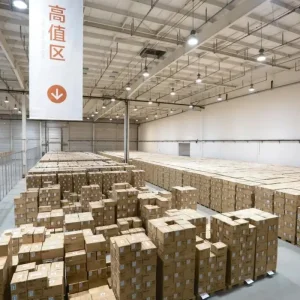
Pre-shipment warehouse buffering, multi-vendor palletizing, and cargo protection managed directly across Shenzhen, Shanghai, and Yiwu origin nodes.
Navigating maritime bottlenecks at the Port of Durban, managing inland freight corridors to Gauteng, and leveraging origin-level warehouse engineering in China.
South Africa stands as the commercial epicenter of Sub-Saharan Africa, with the Gauteng economic cluster (Johannesburg and Pretoria) driving massive demand for manufactured imports, mining equipment, automotive components, and consumer goods. However, trade routes face continuous systemic friction. Vessel congestion at the Port of Durban and Transnet rail disruptions mean that commercial importers cannot afford unstructured, fragmented deliveries. Staging, verifying, and packaging cargo inside secure Chinese origin warehouses before deep-sea transit ensures container utilization hits absolute maximum density, eliminating downstream clearance delays and mitigating punitive local demurrage penalties.
By shifting inventory handling upstream into Chinese bonded and non-bonded warehouse networks (Shenzhen, Ningbo, Shanghai, Yiwu), importers gain leverage over quality and transit economics. Instead of incurring costly storage fees in Johannesburg or Cape Town, raw materials and consumer products are inspected, sorted, moisture-sealed for tropical marine crossing, and barcoded under strict international protocols. Our facilities offer automated digital stock telemetry, enabling African procurement officers to verify Bill of Lading manifests, HS tariff classifications, and South African Revenue Service (SARS) duty calculations prior to factory payment release.
Customized warehousing workflows addressing regulatory, climatic, and mechanical challenges across Southern Africa.
With South Africa's intense adoption of decentralized solar systems to combat load shedding, we provide certified Dangerous Goods (DG) warehousing in China for lithium-ion battery banks, Tier-1 solar panels, and hybrid inverters. Full UN38.3 compliance, MSDS packaging audits, and anti-static palletizing are completed prior to export.
Supplying the mineral corridors of Rustenburg, Witbank, and the Northern Cape requires heavy machinery parts to withstand extreme conditions. Our warehouses perform precision crating, anti-corrosion barrier wrapping, and serialized weight-distribution strapping for FCL containers headed to Ngqura and Durban.
Fast-moving consumer apparel, home improvement items, and electronics require pick-and-pack precision. We aggregate small parcels from up to 20 separate Chinese suppliers, repack them to reduce cubic measurement (CBM), and prepare unified customs dockets for seamless entry into Takealot fulfillment centers or private DC hubs.
Disciplined, zero-defect execution mitigating delays across every physical and digital touchpoint.
Pickups from industrial belts (Guangdong, Zhejiang, Jiangsu) with incoming carton integrity inspection, barcode scanning, and tare weight verification.
Consolidating multi-factory SKUs. Repacking, waterproof shrink-wrapping, drop testing, and optimizing container space utilization to minimize landed CBM costs.
Formulating SARS-aligned documentation: Commercial Invoices, Packing Lists, Certificates of Origin, and LOA (Letter of Authority) support for NRCS controlled goods.
Direct ocean bookings via premium liners (COSCO, Maersk, MSC) to Durban, Coega, and Cape Town, or high-velocity air freight to OR Tambo (JNB).
Executing pre-clearance EDI filings, ensuring precise tariff classification, settling import VAT, and expediting port terminal handovers without detention.
Bonded transport via road convoys across the N3 corridor to City Deep (JHB), Pretoria, or extended cross-border transit to Botswana, Zimbabwe, and Namibia.
Operational insights compiled by senior supply chain directors to de-risk your international freight operations.
The Port of Durban frequently faces berthing backlogs and adverse weather disruptions. By utilizing our origin warehouses in China, importers hold buffer stock at substantially lower warehousing rates than South African commercial rates. Shipments are consolidated into direct FCL loads or scheduled LCL blocks, perfectly timed with vessel space allocations and port availability, avoiding unpredictable demurrage costs and off-dock terminal bottlenecks in KwaZulu-Natal.
Yes. Multi-supplier consolidation is our core competence. Our facilities in Shenzhen, Yiwu, and Shanghai collect shipments from dozens of different factories, cross-dock the cargo, inspect individual cartons, re-palletize according to your weight and volume specifications, and issue a consolidated Bill of Lading with a synchronized packing list for single-entry SARS clearance in South Africa.
Cargo entering South Africa must comply with SARS customs codes and, where applicable, NRCS (National Regulator for Compulsory Specifications) approvals. Regulated items—such as electrical components, automotive spare parts, and personal protective equipment—require a valid Letter of Authority (LOA). Our pre-export documentation reviews ensure that all technical markings, safety documentation, and invoices match South African import requirements before shipping containers leave Chinese ports.
Standard sea freight from China's central ports to Durban takes approximately 22 to 28 days on the water. Post-berthing clearance and N3 corridor intermodal transport to Gauteng distribution centers or City Deep typically require an additional 5 to 9 days, depending on rail and road conditions. For high-priority stock, direct air cargo routing from Shanghai (PVG) or Shenzhen (SZX) to O.R. Tambo International Airport (JNB) delivers within 5 to 8 days door-to-door.
Lithium-ion energy storage systems and LiFePO4 batteries require specialized Class 9 Dangerous Goods handling. Our warehouses possess authorized DG licenses, flame-retardant storage zones, and trained personnel to check UN specifications, verify safety markings, package with non-combustible cushioning, and arrange maritime safety filings (MSDS & Dangerous Goods Declaration) before container loading.
Proven operational channels connecting Chinese industrial manufacturing with global distribution centers, regional fulfillment networks, and multimodal transit points.