

Wholesale DDU Delivered Duty Unpaid Shipping Service, Exporters
Request DDU Quote
Enterprise multimodal transport channels engineered for international freight efficiency, clearance agility, and global logistics visibility.



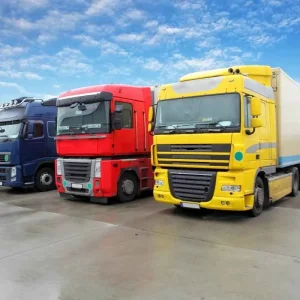


Decoupling freight transport liabilities from fiscal customs clearances in advanced international trade ecosystems.
In modern cross-border enterprise commerce, DDU (Delivered Duty Unpaid)—formally integrated under the Incoterms® DAP (Delivered at Place) nomenclature by the International Chamber of Commerce (ICC)—remains the structural linchpin for global industrial procurement, high-tech manufacturing, and multinational distribution. Unlike standard DDP (Delivered Duty Paid) frameworks where the logistics provider or exporter assumes localized fiscal liabilities (tariffs, localized Value Added Tax/Goods and Services Tax, and anti-dumping duties), DDU precisely bifurcates the physical transport from administrative destination customs entries.
As multinational corporations navigate complex tariff regimes (such as United States Section 301 tariffs, the European Union's Carbon Border Adjustment Mechanism [CBAM], and varying regional GST frameworks), corporate buyers systematically opt for DDU. This framework empowers consignees to leverage their existing fiscal registrations, duty deferment accounts, bonded facility privileges, and localized tax credit offsets without inflating baseline supplier freight invoices or incurring double-taxation liabilities.
| Logistics Dimension | DDU (Delivered Duty Unpaid / DAP) | DDP (Delivered Duty Paid) | FOB (Free On Board) |
|---|---|---|---|
| Primary Carriage & Freight | Managed & Paid by Seller/Forwarder | Managed & Paid by Seller/Forwarder | Nominated & Borne by Buyer |
| Export Formalities & Licensure | Seller's Absolute Responsibility | Seller's Absolute Responsibility | Seller's Responsibility |
| Import Clearance & Declarations | Buyer (Consignee) or Designated Broker | Seller or Integrated Carrier Agent | Buyer / Importer of Record (IOR) |
| Import Tariffs, Duties & Port VAT | Borne Exclusively by Consignee | Pre-calculated & Settled by Forwarder | Directly Incurred by Consignee |
| Final Destination Inland Drayage | Delivered to Final Specified Facility | Delivered to Assigned Dock/Center | Consignee Inland Routing |
Engineered logistics frameworks across advanced commercial sectors, ensuring operational velocity without fiscal friction.
Industrial assembly components shipped from Chinese manufacturing hubs (Shenzhen, Ningbo, Suzhou) direct to North American and European production floors. Under DDU, automotive conglomerates clear parts under their internal bonded customs registrations, maintaining inventory liquidity while bypassing unrecoverable bundled customs taxes.
Managing high-value semiconductor arrays, IoT modules, and consumer hardware requiring stringent classification and regulatory filings (FCC, CE, RoHS). DDU routing allows the corporate entity's legal broker to execute the formal entry, apply specific tariff exclusions, and maintain immediate chain-of-custody compliance.
Global wholesalers stocking multi-client 3PL infrastructures across Europe, Australia, and the Middle East. Shipments land via our international ocean or air conduits, hand off seamlessly at port terminals for buyer customs entry, and execute timed-window deliveries to decentralized logistics nodes.
Certified routing for items with complex regulatory burdens—UN3480/UN3481 lithium-ion battery assemblies, industrial chemicals, and heavy machinery. Full integration with Shanghai Meishe’s expert documentation teams for export licensing, MSDS evaluation, and compliant carriage handling.
Strict chain-of-custody parameters where destination health clearance permits (e.g., US FDA 510(k), European MDR) must be managed exclusively by the domestic license holder. Our DDU protocol synchronizes freight transit milestones directly with local brokerage filings to prevent cold-chain or shelf-life bottlenecks.
Receiving fragmented LCL inventory from multiple production centers across Yiwu, Ningbo, and Shenzhen into centralized hubs. Consolidating into bespoke FCL containers routed under unified ocean bills of lading to buyer doorsteps with complete commercial integrity.
The convergence of predictive AI routing, automated API customs gateways, and blockchain telemetry.
Direct electronic document dispatch (EDI/JSON) connecting factory staging with destination customs brokers, cutting document transmittal latency to zero.
Machine learning models ingesting real-time port congestion data, canal delays, and weather vectors to autonomously optimize intermodal transfers.
Container-level continuous tracking of shock, temperature, tilt, and GPS coordinates, providing audit-proof compliance for high-value cargo.
Full-spectrum Scope 3 logistics emission calculations tailored for CBAM reporting, green vessel routing, and verified carbon offset integration.
Deploy custom supply chain assets backed by verified origin consolidation, risk insurance, and multi-modal transit capacity.

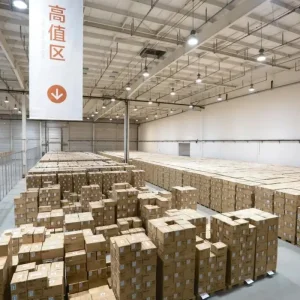




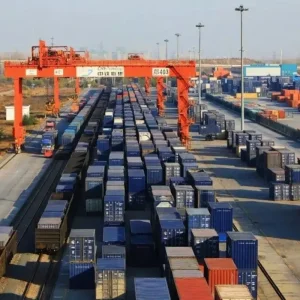

Direct technical explanations addressing cross-border liabilities, documentation standards, and risk mitigation.
Under Incoterms® 2000, DDU (Delivered Duty Unpaid) represented delivery to destination without clearing import duties. The ICC updated this in Incoterms® 2010 and 2020 by replacing DDU with DAP (Delivered at Place). Functionally, commercial operations treat DDU and DAP as synonymous: the forwarder and exporter assume all risks and carriage expenses up to the specified delivery destination point, excluding import customs clearance, duties, and local administrative taxes, which remain the buyer's obligation.
Large enterprise importers often possess dedicated domestic customs brokers, bonded warehouse accounts, and registered duty deferment setups. Under DDU, these firms reclaim localized value-added taxes (such as EU Import VAT or UK VAT) and avoid markups that foreign forwarders include to buffer against tariff fluctuations in DDP calculations.
We work in direct coordination with the consignee’s designated customs broker. As soon as cargo departs the Chinese origin port, we transmit an electronic Pre-Alert package—including Master/House Air Waybills or Ocean Bills of Lading, Commercial Invoices, and Packing Lists—allowing destination clearance to proceed prior to vessel or aircraft arrival.
If import clearance stalls due to document omissions by the consignee, the buyer is liable for demurrage, detention, and terminal storage fees. Shanghai Meishe proactively reviews HS codes, certificates of origin, and compliance paperwork prior to origin departure to minimize audit exposure.
Yes. Shanghai Meishe manages specialized handling for Class 9 Dangerous Goods, UN3480/UN3481 lithium-ion battery packs, and magnetic materials. Cargo must be accompanied by verified UN38.3 test summaries, MSDS documentation, and export condition reports prior to vessel or airline carriage acceptance.
Under DDU/DAP, risk transfers from seller to buyer only when the goods are placed at the disposal of the buyer at the named destination, ready for unloading. Through our dedicated Insurance Brokerage Consultancy, we structure primary transit insurance policies spanning factory collection in China through final facility delivery.