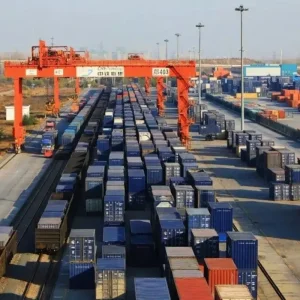
Full Container Line
Core multimodal container solutions connecting factory loading docks in China with terminal operations across Manila, Cebu, Subic, and international regional hubs.


Strategic breakdown of archipelagic supply chain navigation, container terminal throughput, and macro infrastructure projects under the national Build-Better-More program.
The Republic of the Philippines presents one of the most uniquely demanding maritime logistical frameworks in Southeast Asia. Comprising over 7,640 islands, sustaining a robust manufacturing, construction, and consumer goods import pipeline relies overwhelmingly on high-efficiency Full Container Load (FCL) ocean freight solutions. Unlike continental supply chains where long-haul rail and interstate trucking handle primary distribution, Philippine supply chains are essentially oceanic trunklines integrated with coastal feeder networks.
In recent years, the Philippine Gross Domestic Product (GDP) expansion has consistently outpaced regional averages, propelled by heavy infrastructure capital outlay under the government's "Build Better More" (BBM) agenda, escalating foreign direct investment into PEZA (Philippine Economic Zone Authority) industrial enclaves, and unprecedented consumer demand for retail, electronics, and construction supplies originating from China's primary industrial zones. For tier-1 procurement executives, EPC contractors, and consumer brands, securing dependable, fixed-schedule FCL slot allocations is not merely a shipping decision—it is a critical barrier against line stoppages and supply chain disruption.
Operated by ICTSI, MICT is the premier international trade gateway of the Philippines, processing over 65% of international container traffic entering Luzon. Equipped with super post-Panamax quay cranes, it is optimized for high-volume 20GP, 40GP, and 40HQ discharge directly feeding the National Capital Region (NCR) industrial grid.
Managed by Asian Terminals Inc. (ATI), South Harbor serves as a critical counterbalance to MICT. Catering to regional intra-Asia vessel strings, it offers dedicated bonded container yard integration, rapid gate turnarounds, and specialized handling facilities for steel coils, project cargo flat racks, and refrigerated containers.
Positioned as the southern bypass terminal for Greater Manila, BCT directly interfaces with the CALABARZON (Cavite, Laguna, Batangas, Rizal, Quezon) industrial corridor. It circumvents the notorious NCR urban truck ban ordinances, saving 12 to 24 hours of intermodal transit for PEZA-registered electronics and automotive plants.
The industrial anchor for Central and Northern Luzon. Operating within the Subic Bay Freeport Zone, SBITC provides duty-free, tax-exempt transit processing for manufacturing conglomerates located along the Subic-Clark-Tarlac Expressway (SCTX) corridor, functioning as a disaster-resilient fallback port.
The logistical epicenter of Central Visayas. FCL ocean containers routed directly to Cebu avoid costly double-handling and inter-island roll-on/roll-off (RoRo) domestic transshipment charges, providing a streamlined path for commercial fixtures, raw plastics, and retail inventory feeding Visayan consumer centers.
Mindanao's high-efficiency maritime gateways. Handling incoming shipments of construction materials, solar PV panels, agricultural machinery, and specialized packaging supplies, these terminals directly service the agrarian and infrastructural modernization projects across southern Philippines.
In-depth procedural compliance: Electronic-to-Mobile (e2m) customs systems, CPRS registration, ACFTA Form E tariff elimination, and statutory agency clearances.
Customs clearance in the Philippines demands meticulous adherence to the Customs Modernization and Tariff Act (CMTA - Republic Act No. 10863). The Philippine Bureau of Customs (BOC) operates the Electronic-to-Mobile (e2m) automated clearance system, which categorizes inbound FCL entries via an automated risk management system into three primary assessment lanes:
| BOC Clearance Channel | Inspection Protocol | Documentation Requirement | Standard Release Velocity |
|---|---|---|---|
| Green Lane (Express) | No physical container inspection; no documentary re-audit at terminal. | Pre-cleared electronic entry, matched manifest, accredited regular importer. | 12 - 24 Hours post-discharge |
| Yellow Lane (Documentary) | Comprehensive document audit (Invoices, Packing Lists, Certificates of Origin). | Discrepancy review, valuation check against BOC reference database. | 24 - 48 Hours |
| Red Lane (Physical / X-Ray) | Mandatory non-intrusive container X-ray scan and possible 100% physical examination. | High-risk tariff headings, new importers, SPS goods, random selectivity. | 3 - 5 Business Days |
An enterprise importing FCL cargo from China must possess an active Client Profile Registration System (CPRS) accreditation issued through the BOC AMO (Account Management Office) and the Bureau of Internal Revenue (BIR) ICC (Importer Clearance Certificate). Without this regulatory baseline, containerized cargo faces immediate terminal abandonment notices and severe daily demurrage accrual.
One of the most consequential strategic levers for lowering landed costs in the Philippines is the systematic implementation of the ASEAN-China Free Trade Area (ACFTA) Framework. By presenting a validated, electronically verified Certificate of Origin (CO) Form E issued by the authorized customs or trade bureau in China, importers can reduce standard Most Favored Nation (MFN) tariffs—ranging from 5% to 30%—down to a definitive 0% to 5% ad valorem tariff across hundreds of harmonized system (HS) product lines.
Beyond fiscal tariff administration, consignees must ensure pre-shipment compliance with Philippine statutory agencies depending on cargo classification:
Harnessing mainland China's manufacturing clusters, equipment availability, competitive ocean freight carrier contracts, and optimized consolidation.
The geographical proximity of China's coastal industrial belt to the Philippine archipelago provides unmatched ocean freight velocity. Transit from South China loading ports—such as Shenzhen (Yantian/Shekou), Guangzhou (Nansha), and Xiamen—to Manila or Subic Bay spans a swift 3 to 5 sailing days. Even direct sailings originating from the Yangtze River Delta clusters (Ningbo-Zhoushan, Shanghai) and Northern industrial ports (Qingdao, Tianjin Xingang) maintain consistent 6 to 9 day transit windows.
| China Origin Cluster | Major Load Ports (POL) | Target Philippine Port (POD) | Typical Port-to-Port Transit | Key Commodity Profiles |
|---|---|---|---|---|
| Pearl River Delta (Guangdong) | Shenzhen, Nansha, Foshan | Manila (MICT / South), Batangas | 3 - 5 Days | Electronics, Home Appliances, Plastic Goods, Furniture |
| Fujian Coastal Hub | Xiamen, Quanzhou | Manila, Cebu, Davao | 3 - 4 Days | Ceramic Tiles, Footwear, Building Facades, Hardware |
| Yangtze River Delta | Shanghai, Ningbo-Zhoushan | Manila, Subic Bay, Batangas | 5 - 7 Days | Industrial Machinery, PV Inverters, Auto Parts, Fabrics |
| Bohai Rim (North China) | Qingdao, Tianjin, Dalian | Manila, Cagayan de Oro | 7 - 10 Days | Structural Steel, Heavy Equipment, Chemicals, Raw Glass |
In high-volume ocean supply chains, choosing the right container specification directly shifts freight cost per cubic meter ($/CBM) or freight per metric ton ($/MT). Our China-Philippine FCL routing framework actively provisions all ISO standardized shipping equipment:
Moreover, port congestion across Manila's primary terminals can occasionally expose importers to exorbitant carrier demurrage, terminal detention, and storage penalties. By establishing enterprise-level service contracts with premier regional container carriers (SITC, CNC/CMA CGM, Wan Hai Lines, Evergreen, COSCO, Maersk), we systematically secure 14 to 21 Days Combined Free Time (Demurrage + Detention). This protective margin insulates importers from customs inspection delays and local truck ban bottlenecks, guaranteeing predictable landed pricing.
How tier-1 corporations across distinct market sectors deploy specialized FCL freight systems to achieve cost leadership, statutory security, and uninterrupted delivery cycles.
Cargo: Structural H-beams, scaffolding systems, high-spec curtain wall glass, and porcelain flooring tiles.
Routing Strategy: POL Tianjin/Xiamen to POD Manila South Harbor & Batangas. Utilizing certified PS/ICC inspection documentation prior to China vessel loading to bypass Red Lane administrative holds, maintaining direct flatbed delivery directly onto Metro Manila and Clark construction sites.
Cargo: Monocrystalline solar panels, string inverters, racking systems, and lithium BESS storage units.
Routing Strategy: POL Shanghai/Ningbo to Subic Bay (SBITC) for Central Luzon solar farms or Davao DICT for Mindanao projects. Securing Department of Energy (DOE) non-commercial tax incentive clearances combined with Form E tariff reductions to maximize financial IRR.
Cargo: Fast-moving home goods, consumer lifestyle merchandise, apparel, and plastic homeware.
Routing Strategy: Multi-factory consolidation across Shenzhen and Yiwu distribution centers, loaded into optimized 40HQ blocks. Shipped directly to MICT under fully audited commercial invoices, synchronizing with major Shopee/Lazada omnichannel campaign fulfillment schedules.
Cargo: Precision printed circuit components, stamped metal stampings, passive sub-assemblies.
Routing Strategy: Direct sailing to Batangas Port (BCT), bypassing NCR truck restrictions entirely. Utilizing electronic PEZA clearance systems for tax-free, duty-free transfer directly into bonded facilities throughout Laguna Technopark and First Philippine Industrial Park (FPIP).
Cargo: Commercial truck tires, suspension assemblies, transmission components, and brake rotors.
Routing Strategy: POL Qingdao and Ningbo into Manila North Harbor. High-density payload loading managed inside standard 20GP marine containers to balance maximum weight allocations under Philippine DPWH (Public Works and Highways) bridge load limitations.
Cargo: Virgin polymer resins (PP, PE, PVC), pigment masterbatches, industrial chemical drums.
Routing Strategy: Full 20GP bulk-liner and palletized sea transport directly terminating at Cebu International Port (CIP) and Cagayan de Oro (Mindanao), feeding local extrusion, packaging, and agricultural plastic film manufacturing plants.
How data telemetry, predictive demurrage modeling, automated terminal operations, and low-emission maritime corridors are reshaping China-Philippines commerce.
The traditional ocean freight forwarding model was reactive: importers received vessel arrival notices, waited for port discharge, and discovered customs holds or terminal congestion after penalties started ticking. The contemporary era is powered by IoT-integrated smart container architecture and predictive AI scheduling. Real-time satellite transponders fitted to high-value FCL shipments track not merely ocean GPS coordinates, but also internal container temperatures, humidity thresholds, and unauthorized door breaches.
Furthermore, cloud-based customs integration software directly bridges China origin manifests with the BOC e2m gateway. Predictive demurrage algorithms cross-reference container vessel berthing schedules, terminal gate queue times at MICT and South Harbor, and historical customs release timelines across specific HS code classifications. Importers receive automated alerts regarding potential lane inspections 48 hours prior to vessel drop, allowing transport managers to mobilize dedicated truck drayage assets the instant terminal gates clear.
To definitively solve Metro Manila's chronic urban traffic density, the Philippine logistics landscape is experiencing an aggressive shift toward Inland Container Depots (ICD) and multi-modal rail integration. Facilities such as the Laguna Gateway Inland Container Terminal (LGICT) in Calamba function as a direct dry port extension of MICT. FCL containers are transported via bonded drayage or dedicated rail links directly out of the port basin, allowing regional customs clearance to occur outside congested urban zones.
Simultaneously, international container lines are introducing cleaner, LNG-powered and methanol-capable feeder vessels into the South China-Philippines circuit. Backed by corporate ESG mandates and tightening IMO (International Maritime Organization) carbon intensity indicator (CII) targets, global brand owners shipping full container loads can now verify verifiable Scope 3 greenhouse gas reductions per maritime TEU-kilometer.
Authoritative operational answers from our senior freight engineering and customs brokerage team.
Specialized forwarding operations: DDU, DDP, railway corridors, and consolidated logistics linking primary production hubs with worldwide destinations.