Connecting Yangtze River Delta & Pearl River Delta manufacturing zones directly to Sofia, Plovdiv, Varna, and Burgas.

High-precision China factory consolidation, bonded cross-docking, and inventory buffering engineered for Bulgarian automotive and mechatronics assembly lines.
Explore Solution Details
Turnkey DDP multi-trade routing featuring absolute tax certainty, pre-paid customs clearance, and direct-to-warehouse dispatch across global tier-1 corridors.
View DDP Capabilities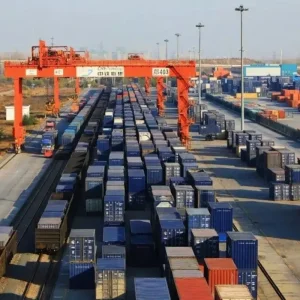
Accelerated middle-corridor and northern-rail links connecting Chongqing, Xi'an, and Chengdu to Eastern Europe with unified CIM/SMGS consignment notes.
Review Rail Corridors
High-volume ocean container contracts (20GP/40HQ/OT) with priority berthing, demurrage waivers, and direct transshipment via Mediterranean maritime links.
Check Ocean CapacityIn the contemporary macroeconomic terrain, Bulgaria has transitioned from a peripheral southeastern European market into an indispensable strategic conduit for nearshoring, advanced manufacturing, and pan-European distribution. Nestled at the critical geopolitical junction connecting the Black Sea, Turkey, the Western Balkans, and Central Europe, Bulgaria commands key segments of the Pan-European Transport Corridors IV, VIII, IX, and X. With its competitive flat corporate and personal tax regime (10%), strategic maritime ports in Varna and Burgas, and an accelerating cluster of specialized industrial zones—notably the Trakia Economic Zone (TEZ) in Plovdiv and Sofia’s high-tech industrial parks—Bulgaria functions as a pivotal bridgehead for original equipment manufacturers (OEMs), Tier-1 automotive component producers, and global distribution operations.
The contemporary Bulgarian industrial landscape is characterized by deep manufacturing integration into global supply chains. Over 250 automotive component manufacturers operate within Bulgaria, producing wire harnesses, electronics, sensors, aluminum die-casting, and powertrain micro-components for premier European automotive marques including Volkswagen, BMW, Mercedes-Benz, and Stellantis. Concurrently, the regional boom in photovoltaic installations, grid-scale Battery Energy Storage Systems (BESS), and heavy industrial machinery has generated a sustained, high-volume procurement demand for critical components sourced from Chinese industrial centers.
However, running sophisticated manufacturing facilities in Plovdiv, Ruse, or Shumen requires supply chain predictability. The post-pandemic vulnerabilities of extended maritime lanes, combined with Red Sea maritime transit realignments and fluctuating bunker adjustment factors (BAF), have made traditional ad-hoc forwarding obsolete. Bulgarian procurement executives and operations leaders require an integrated supply chain architecture that blends dynamic multi-modal freight choices, end-to-end digital shipment tracking, regulatory compliance under the EU Union Customs Code (UCC), and local buffer warehousing.
Strategic Imperative: "Achieving supply chain resilience in Bulgaria requires transitioning from spot-market transactional freight forwarding to an orchestrated, multi-tier supply chain partnership capable of mitigating transit volatility through diversified physical corridors and integrated digital visibility."
The modernization of Chinese manufacturing under the Industry 4.0 paradigm has revolutionized upstream supplier interfaces for European buyers. Beyond primary raw labor arbitrage, Chinese industrial infrastructure is now defined by extreme automation, vertically integrated component supply ecosystems, automated dark warehouses, and real-time electronic data interchange (EDI). For industrial enterprises operating in Bulgaria, collaborating with a digitally integrated supply chain partner bridges the geographic gap between Chinese manufacturing nodes and Balkan factory floors.
Vendor-Managed Inventory (VMI) stationed in Shanghai, Shenzhen, and Ningbo ensures sub-assembly testing, barcode scanning, and moisture-controlled packaging before cargo departs.
Direct EDI and API data handoffs trigger container dispatch from Chinese automated production lines precisely mapped to Bulgarian production sprint intervals, minimizing carrying costs.
Consolidating precision tooling, raw electronics, fasteners, and casings from 10+ disparate provincial vendors into single customs-cleared FCL units delivers substantial freight savings.
This structural synergy minimizes lead-time variability. When sub-tier suppliers in Guangdong, Zhejiang, or Jiangsu face material shortages or logistics adjustments, our Shanghai-based command center automatically calculates optimal rerouting via intermodal rail, direct air charters, or alternative maritime corridors, ensuring that factory floors in Sofia or Plovdiv never face assembly line halts.
Navigating shipments between China and Bulgaria requires operational flexibility. Relying on a single transport mode introduces severe systemic risk. We provide a calibrated, 4-tier multimodal network specifically engineered to balance budget targets, lead times, and carbon considerations.
Transit Time: 28–35 Days | Ideal for: Heavy Machinery, High-Volume Raw Materials, Structural Steel
Vessels load at major Chinese container terminals (Shanghai, Ningbo, Qingdao, Shenzhen) with ocean transit via the Suez Canal or Cape Route to the Mediterranean transshipment hubs (Piraeus, Greece; Istanbul/Ambarli, Turkey). From Piraeus or Istanbul, cargo shifts to feeder vessels directly arriving at Port of Burgas or Port of Varna, or utilizes bonded block-trucking directly into Bulgarian customs terminals within 24–48 hours of vessel discharge.
Transit Time: 16–22 Days | Ideal for: Automotive Sub-Assemblies, Solar Inverters, Electronics
Departing from Xi'an, Zhengzhou, or Chengdu rail ports. Utilizing both the Northern Route (via Kazakhstan, Russia, Belarus, Malaszewicze into Central Europe and railed down to Sofia) and the Trans-Caspian International Transport Route (TITR / Middle Corridor via Baku and Tbilisi through Turkey into Kapikule/Svilengrad border). This mode provides roughly 50% time savings versus ocean freight at 40% the cost of air freight.
Transit Time: 3–6 Days | Ideal for: Urgent Prototyping, Line-Down Situations, High-Density Tech
Direct flights and scheduled belly-hold allotments operating out of Shanghai Pudong (PVG), Hong Kong (HKG), and Beijing (PEK) into Sofia Airport (SOF), or alternative gateways such as Frankfurt (FRA), Vienna (VIE), or Istanbul (IST) backed by direct dedicated bonded temperature-controlled trucking into Bulgaria.
Transit Time: 12–15 Days | Ideal for: Dangerous Goods (Batteries/Chemicals), Oversized Components
Trucks operating under the Transports Internationaux Routiers (TIR) carnet depart western China ports (Khorgos/Alashankou), traversing Central Asia and Turkey straight into Bulgaria. Sealed trailers experience expedited border crossings without physical offloading until arrival at the consignee’s Bulgarian bonded facility.
Real-world supply chain orchestration addressing local manufacturing, regulatory hurdles, and time-critical delivery profiles across Bulgaria.
Challenge: An international Tier-1 manufacturer in the Trakia Economic Zone required daily JIT component replenishment from Ningbo suppliers while avoiding inventory bloat.
Solution: We engineered an ocean-rail hybrid pipeline. Weekly 40HQ containers clear import customs under DDP at Burgas Port, immediately transferring to a bonded consolidation depot in Plovdiv that releases parts directly to the manufacturing line in 4-hour replenishment windows.
Challenge: Transporting 45MW of solar PV modules and high-capacity lithium iron phosphate (LiFePO4) battery energy storage racks with strict temperature control and hazardous goods certifications.
Solution: Formulated specialized Dangerous Goods (DG Class 9) container shipping from Shenzhen to Burgas, accompanied by full UN38.3 test certificates, MSDS verification, and specialized hydraulic offloading cranes on-site in southern Bulgaria.
Challenge: An omnichannel consumer electronics retailer needed rapid replenishment of trending electronics into its Sofia regional hub to serve domestic buyers and re-export to Romania and Greece.
Solution: Deployed direct air consolidation from Shenzhen (SZX) to Sofia (SOF) with automated customs entry, batch labeling according to CE standards, and localized API inventory feeding domestic couriers across the Balkan peninsula within 48 hours.
A critical vulnerability in long-haul logistics lies at the customs border. As an external border of the European Union, the National Customs Agency of Bulgaria (Агенция „Митници“) maintains stringent inspection regimens concerning tariff classification (TARIC codes), rules of origin, CE marking compliance, and valuation declarations. Unprepared importers frequently face cargo impoundments, demurrage penalties, and costly customs reassessments.
For mid-sized and large enterprises importing from China, the transition from traditional Ex-Works (EXW) or FOB terms to Delivered Duty Paid (DDP) managed by an accredited freight forwarding entity represents a quantum leap in risk reduction:
Operational guidance for procurement directors, logistics managers, and business owners importing from China to Bulgaria.
Standard deep-sea container transit from primary Chinese ports (Shanghai, Ningbo, Shenzhen) to Burgas or Varna takes approximately 28 to 35 days under normal navigation via Suez. When re-routing around the Cape of Good Hope, transit ranges between 40 and 46 days. We also offer express ocean-rail options through Piraeus (Greece), cutting total transit to 22-26 days directly into southern Bulgaria.
Yes. Our true DDP terms manage the complete lifecycle: collection at your Chinese manufacturer, export customs, main carriage, arrival clearance through Bulgarian Customs, full payment of EU customs duty and import VAT, and final-mile domestic truck delivery to your receiving dock in Plovdiv with a formal proof of delivery (POD).
Railway shipping operates via two routes: through Malaszewicze (Poland) with onward rail/truck transit to Sofia, or via the Middle Corridor across the Caspian Sea entering Bulgaria through the Kapikule/Svilengrad rail portal. Rail transit typically clocks 16–20 days, representing a 50% time saving versus ocean freight, and serves as an ideal intermediate for high-value automotive components.
Absolutely. We handle DG Class 9 shipments (UN3480/UN3481). We verify that products possess valid UN38.3 test summaries, MSDS documentation, and meet dangerous goods sea packaging standards prior to departure. Delivery can be made directly to renewable installation sites throughout Bulgaria.
Under DDU (Delivered Duty Unpaid, or Incoterms DAP), we transport your cargo directly to your Bulgarian address, but your appointed local customs broker manages clearance with the Bulgarian Customs Agency, and your company pays customs duties and 20% Bulgarian VAT directly to the authorities.
Yes. We operate centralized consolidation warehouses in Shenzhen, Yiwu, and Shanghai. We pick up LCL cargo from multiple suppliers across China, verify physical carton counts and packaging integrity, consolidate them into a single FCL container, and issue a unified Bill of Lading, substantially cutting administrative and clearance fees.
Explore our specialized transportation modes, customs engineering, and international delivery frameworks.

Integrated logistics infrastructure enabling multi-market distribution with compliant customs clearance and last-mile scheduling for multinational sellers.
View Fulfillment Lane
Cost-efficient Less than Container Load shipping from China ports with weekly sailings, consolidated palletizing, and direct Black Sea customs deconsolidation.
Request LCL Schedule
Fast-track air cargo services for urgent components, precision instruments, and prototypes with dedicated space allocation and 3-5 day delivery windows.
Book Air Capacity
All-risk Institute Cargo Clauses (A) coverage protecting industrial consignments against loss, general average, transit damage, and maritime risks.
Protect Your Cargo
Complete duty-paid logistics covering TARIC classification, VAT management, and onward cross-border transport across all European Union member states.
Explore EU DDP Terms
Architecting robust industrial replenishment networks, inventory buffers, and multi-hub fulfillment strategies built for scalable European manufacturing.
Consult SCM Specialists
Door delivery to your facility with full logistics coordination while giving your internal customs brokerage complete control over local duties and VAT.
Select DDU Shipping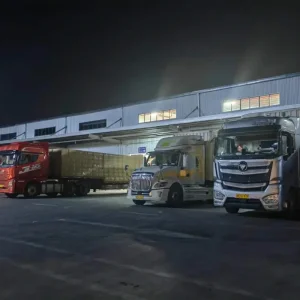
Continuous highway transport spanning China through Central Asia and Turkey straight into Bulgaria in 12–15 days, providing unmatched agility for oversized and sensitive cargo.
Configure Overland RouteConsult with our international trade logistics architects. We build customized routing, tax-compliant customs structures, and dependable shipping schedules tailored to your enterprise procurement objectives.
