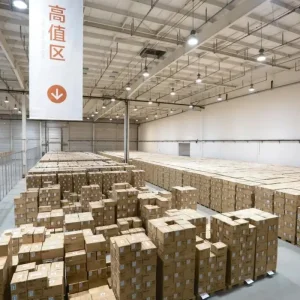
Direct access to institutional cargo indemnity, multimodal consolidation, and managed customs transit infrastructure engineered for Australian port operations.


Marine Claim Settlement Clearance Rate
Cumulative Insured Cargo Volume Underwritten
Expedited Average Loss Assessment Window
APRA & ASIC Regulatory Alignment
Australia operates as one of the world's most geographically distinct island economies, relying fundamentally on robust maritime shipping corridors and highly integrated air freight routes. With bilateral trade volumes between China and Australia reaching hundreds of billions of dollars across mining equipment, manufactured consumer electronics, renewable energy infrastructure, building materials, and automotive components, supply chain exposure to transit disruption is an acute commercial vulnerability.
Operating within this market requires an intricate understanding of the Insurance Contracts Act 1984 (Cth), oversight mandates issued by the Australian Prudential Regulation Authority (APRA), and strict surveillance conducted by the Australian Securities and Investments Commission (ASIC). Under standard Australian commercial maritime operations, failure to execute legally sound Institute Cargo Clauses (ICC A, B, or C) leaves wholesale importers, EPC contractors, and distributors defenseless against General Average declarations, open-sea container loss, and physical damage from heavy weather in the Great Australian Bight or Western Pacific corridors.
Tailored cargo risk transfer frameworks mitigating operational uncertainties across diverse Australian industrial domains.
Oversized project cargo moving into Port Hedland, Dampier, and Fremantle for the Pilbara iron ore and critical minerals sectors. We structure bespoke Project Cargo Insurance featuring Delay in Start-Up (DSU) and Advance Loss of Profits (ALOP) endorsements, shielding Tier-1 engineering firms from capital equipment structural damage during rough transits.
Solar photovoltaic modules, inverters, and utility-scale battery energy storage systems (BESS) require specialized micro-fracture warranties and thermal runaway transit riders. Our brokerage integrates manufacturer testing certificates with insurer-approved securing methods to guarantee claim validity across sea-land interfaces.
High-turnover consumer goods distributed through Amazon fulfillment hubs in Kemps Creek, Ravenhall, and Moorebank. We deploy open-cover aggregate marine declarations with automated API integrations, allowing Australian cross-border merchants to automatically secure door-to-door coverage from Chinese factory production lines to Australian domestic end users.
With deep operational hubs stationed across Shanghai, Ningbo, Shenzhen, Guangzhou, and Qingdao, our on-the-ground survey networks verify export container lashing, phytosanitary treatment, and pre-loading physical integrity. This origin-level risk reduction minimizes Australian Border Force and DAFF inspection rejections by over 92%.
The seamless combination of China’s advanced manufacturing ecosystems and Meishe's institutional freight forwarding framework establishes unprecedented operational resilience. By integrating insurance brokerage directly within the supply chain staging phase, importers avoid the disconnect between traditional standalone Australian insurance brokers and origin freight forwarders.
Our clients benefit from pre-shipment cargo surveying, precision package classification, and verified load sequencing in Shanghai and Shenzhen staging warehouses. This end-to-end oversight ensures that every consignment meets strict international packing codes (CTU Code), drastically reducing the incidence of transit shifting, condensation damage, and cargo crushing across rough open-ocean swells.
Transforming static marine transit insurance into proactive, IoT-driven loss prevention systems across Pacific shipping lanes.
Deployment of autonomous sensors tracking G-force impacts, internal container humidity, thermal cycles, and door-opening events. When shipping sensitive pharmaceuticals, high-spec machinery, or precision optics to Australia, live data streams trigger immediate mitigation alerts before damage compounds into total loss.
Automated indemnity triggers based on verifiable meteorological indices. In the event of severe Pacific tropical cyclones or port closure declarations at Port Botany or Melbourne, pre-calculated delay disbursements release automatically without requiring protracted manual claims adjustment.
Utilizing cryptographic bills of lading and immutable delivery scans, our claims pipeline drastically slashes payout cycles from 90 days down to 48 hours. Digitized loss documentation, surveyor reports, and customs clearances are harmonized instantly via our secure cloud portal.
Risk management consultancy in Australia demands exacting alignment with local statutory frameworks. Our advisory network coordinates closely with holders of Australian Financial Services Licences (AFSL) and Lloyd's of London syndicates to ensure that wholesale insurance structures comply with the National Consumer Credit Protection Act, the Corporations Act 2001, and General Insurance Code of Practice requirements.
Every policy endorsement is curated to harmonize with the United Nations Convention on Contracts for the International Sale of Goods (CISG) and Incoterms 2020 definitions. Whether executing CIF (Cost, Insurance, and Freight), CIP (Carriage and Insurance Paid To), or specialized DDP terms tailored to Australian GST-registered importers, our consultancy eliminates ambiguities regarding when title, liability, and risk transfer occur.
A comparative overview of our underwriting recommendations for Australian enterprise consignments:
Evaluating shifting maritime choke points, climatic extremes, and cargo-specific vulnerabilities across major trade lanes.
From the Red Sea and Suez Canal to the Malacca Strait and Taiwan Strait, global supply routes are subjected to heightened war risk surcharges, extended routing via the Cape of Good Hope, and transit volatility. Our advisory ensures marine policies feature dynamic rerouting coverage without incurring voidance penalties.
Severe Southern Ocean cold fronts, tropical cyclones in northern waters, and intense temperature differentials induce sweat (condensation) inside standard dry containers. We prescribe specific silica-gel desiccant ratios, thermal insulating liners, and humidity transit riders for sensitive cargo entering Australian ports.
Industrial transformers, electric vehicle battery packs, high-density computing servers, and modular construction assemblies necessitate individualized underwriting policies. Our engineering teams review technical drawings and sea-fastening calculations to secure competitive deductibles and premium discounts.
Essential guidance for commercial directors, supply chain managers, and procurement officers.
International maritime ocean carriers operate under the Hague-Visby Rules or the Hamburg Rules, which limit financial liability to approximately 2 SDRs (Special Drawing Rights) per kilogram or 666.67 SDRs per package. Under these conventions, carriers enjoy up to 17 statutory exemptions—including acts of God, perils of the sea, and navigational errors. Without independent marine insurance, an Australian importer could lose a $250,000 container consignment and recover less than $2,000 from the shipping line.
Under the York-Antwerp Rules, if a vessel experiences a catastrophic incident (engine fire, grounding, severe storm) and cargo is jettisoned or salvage operations are hired, all cargo owners on board must contribute proportionally to the total loss. Vessel operators exercise a maritime possessory lien on all surviving containers. With our cargo insurance brokerage, the underwriter promptly posts the required General Average Bond and Salvage Guarantee, allowing your cargo to clear Australian terminals without capital lockup.
To provide comprehensive indemnity, our brokerage utilizes the standard international commercial valuation formula: CIF value plus 10% (or 20%). This incorporates the commercial invoice cost (C), the maritime/air freight charges (F), international transit insurance (I), and an added uplift factor (typically 10%) to account for anticipated commercial margin, customs clearance charges, harbor dues, and inland handling costs within Australia.
Yes. Lithium-ion batteries (UN3480 and UN3481) fall under Class 9 Dangerous Goods. We ensure that manufacturing facilities provide compliant UN 38.3 test summaries, Material Safety Data Sheets (MSDS), and approved dangerous goods packaging certificates. Our cargo insurance underwriters specifically issue Class 9 hazard endorsements, guaranteeing full cover during ocean stowage, bunkering, and Australian domestic distribution.
Consult directly with our marine cargo risk underwriters and international freight consolidation specialists. Obtain an institutional, APRA-compliant risk assessment and an all-inclusive DDP logistics plan tailored to your import operations.
Send Inquiry Now & Request Policy AssessmentComplete multi-carrier logistics options linking Chinese production corridors with Australian and worldwide industrial hubs.