Pre-departure staging, cross-docking, and maritime freight solutions tailored for commercial enterprises entering the Maghreb economic corridor.
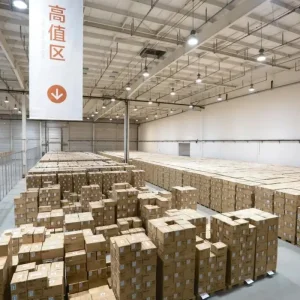



Examining maritime entry bottlenecks, domestic dry-port development, and regulatory frameworks governing bulk cargo, raw materials, and finished goods.
The People's Democratic Republic of Algeria represents the largest territorial landmass in Africa, functioning as a decisive logistics crossroads between Sub-Saharan Africa, Southern Europe, and the broader Mediterranean rim. Historically anchored by hydrocarbon extraction across Hassi Messaoud and Hassi R'Mel, the modern Algerian economy is undergoing a structural industrial metamorphosis. State-backed economic diversification policies (notably under Law No. 22-18 on Investment) have heavily stimulated domestic industrial manufacturing, renewable solar PV infrastructure, automotive CKD/SKD assembly, pharmaceuticals, and agricultural processing. However, this massive influx of raw material procurement and heavy machinery has introduced acute friction within the nation's port and warehousing supply chains.
Maritime gateways such as the Port of Algiers, Port of Oran, Port of Skikda, and Port of Bejaïa frequently experience high berth occupancy rates, container dwell times exceeding 14 to 21 days, and strict customs inspection regimes governed by Algerian Douanes. Under local trade laws, shipments entering the Algerian customs territory require rigorous compliance, including the Certificate of Free Marketing in the Country of Origin, documentary letters of credit (Crédit Documentaire / Credoc), strict import tariff classifications, and localized quality certifications (IANOR). For global buyers and domestic distributors alike, the lack of modern, digitized Class-A warehouse storage within metropolitan port corridors like Rouïba, Oued Smar, and Blida creates compounding overheads in demurrage, detentions, and broken distribution schedules.
Berth congestion at Algiers and Oran results in mandatory container evacuation to peripheral dry ports (Ports Secs), exposing shipments to secondary drayage fees and physical handling risks unless pre-cleared or staged in origin-consolidated hubs.
Stringent Banque d'Algérie foreign exchange control regulations mandate ironclad harmonization between Commercial Invoices, Packing Lists, Certificates of Origin, and WMS inventory tallies to prevent seizure or administrative frozen storage.
Algeria's Autoroute Est-Ouest spanning 1,216 km connects primary coastal consumption hubs with inland industrial zones, requiring heavy-duty, humidity-controlled, and seismically braced storage installations along the Tell Atlas corridor.
To overcome domestic infrastructure shortfalls within Algeria, multinational industrial contractors and tier-one importers increasingly rely on upstream "Origin-Side Virtual Warehousing" anchored at major Chinese export ports (Shanghai, Ningbo, Shenzhen, and Yiwu). By executing product inspection, barcode labeling, custom palletization, and consolidated full-container stuffing (FCL) in state-of-the-art Chinese logistics hubs before shipping across the Mediterranean, enterprises eliminate intermediate port transit storage tariffs, mitigate double-handling damage, and compress Algerian domestic release cycles by up to 45%.
Combining heavy-duty storage engineering, automated inventory telematics, and cross-border manufacturing consolidation to empower Algerian procurement.
As China continues to serve as Algeria's foremost commercial partner—providing high-grade industrial machinery, photovoltaic structures, construction steel, electronics, and consumer commodities—the synergy between Chinese production bases and wholesale warehouse storage infrastructure has become paramount. A modernized wholesale storage provider does not merely offer static floor space; it functions as an intelligent node capable of physical stress testing, precision SKU kitting, climate mitigation, and digital asset tracking.
Storage engineering destined for Mediterranean and North African supply chains must address specific environmental challenges. Coastal Algerian industrial facilities face high maritime salinity and relative atmospheric humidity levels averaging 75-85%, which rapidly induces corrosion in unprotected metallurgical components and structural electricals. Conversely, inland staging facilities bordering the Sahara Desert confront fine silica dust ingress and ambient temperatures exceeding 48°C. Our China-based warehousing solutions incorporate pre-export packaging engineering, anti-corrosive VCI wrapping, automated desiccant allocation, and heavy-duty structural racking designed to withstand maritime transit forces and erratic inland road transport.
| Technical Parameter | Standard Commercial Storage | Our Integrated China-Algeria Storage Protocol | Direct Buyer Benefit |
|---|---|---|---|
| WMS Digitization | Batch-level paper logs / Basic spreadsheets | Cloud-connected WMS with 2D barcode & RFID tracking | Real-time SKU visibility, zero carton discrepancy |
| Corrosion & Climate Control | Standard ambient air, passive ventilation | Dehumidified zones, vacuum VCI sealing, thermal liners | 100% preservation of sensitive electronics & steel |
| Multi-Supplier Consolidation | Single-vendor staging or fragmented dispatch | Centralized hub cross-docking across 20+ Chinese factories | Saves 25-38% ocean freight; simplifies Algerian Douanes filing |
| Heavy Machinery Staging | Floor-block stacking, weight restrictions | Reinforced heavy-duty cantilever racks (up to 5T/level) | Safe handling of industrial dies, pumps, and structural PV frames |
| Documentation Pre-Clearance | Dispatched post-sailing, prone to delays | Pre-validated HS code, packing list, certificate harmonization | Instant customs validation upon arrival at Algiers/Oran |
Within our Tier-1 consolidation facilities situated in Shanghai, Shenzhen, and Yiwu, cargo destined for Algerian commercial centers undergoes comprehensive pre-shipment conditioning. We implement fumigated ISPM-15 compliant solid timber crating, heavy-gauge steel strapping, moisture-barrier shrink wrapping, and weight-balanced container stuffing plans engineered through algorithmic load simulation software. This ensures container volume optimization of up to 98.4%, drastically cutting cubic-meter transportation overheads for our Algerian wholesale and contracting partners.
Purpose-built warehousing architecture designed for national infrastructure, heavy engineering, manufacturing plants, and commercial retail distribution.
Algeria's 15,000 MW "Solar 1,000 MW" tenders demand specialized, climate-controlled warehouse staging in China for bifacial mono PERC solar modules, containerized inverters, and galvanized tracker steel structures, pre-batched per project site.
With Algerian regulatory emphasis on domestic automotive assembly plants in Relizane and Oran, our warehouses manage precision CKD kit staging, barcoded sequential sorting, and timed replenishment to prevent assembly line stoppages.
Supplying state rail, public works (AADL housing), and coastal expansion programs with bonded warehousing, heavy structural staging, and sequenced full-container delivery directly to construction staging zones.
Wholesale storage and dry bulk container liners for petrochemical feedstocks, polymer pellets, and agricultural masterbatches, maintaining strict moisture ceilings prior to deepwater maritime transit to Bejaïa and Djendjen.
Fully compliant with Ministry of Pharmaceutical Industry directives, providing temperature-controlled staging (15°C–25°C) and cleanroom repacking for primary pharmaceutical packaging, active ingredients, and clinical hardware.
High-turnover SKU consolidation for Algerian supermarket chains and wholesale merchants in El Eulma (Setif) and Bab Ezzouar, featuring piece-picking, carton relabeling, and pallet shrinkage optimization.
How our synchronized supply chain mechanism eliminates intermediate port storage risks and safeguards landed balance sheets.
Factory consignments collected across mainland China; verified for gross weight, carton dimensions, and packaging integrity at our regional hub.
Barcode indexing, SKU batching, anti-humidity sealing, and palletization configured to maximize 40HQ maritime container load ratios.
Origin export declarations, Credoc validation, and document matching (Bill of Lading, Certificate of Conformity, Commercial Invoice).
Direct Mediterranean sea carriage to Algiers, Oran, or Skikda with prioritized vessel discharge and immediate transit release to consignee warehouses.
Eliminate costly Algerian port demurrage and uncoordinated freight handling. Our logistics engineering team configures dedicated warehouse consolidation, custom crating, and marine transit protocols engineered for the Maghreb market.
Send Inquiry NowComplete multi-region logistical routing, dedicated FCL charters, expedited air freight, and enterprise supply chain engineering.






Expert insights compiled by senior supply chain specialists handling maritime transit, customs compliance, and industrial storage for North Africa.
The Port of Algiers frequently faces severe container berth congestion, resulting in expensive port storage and demurrage tariffs. By consolidating multiple supplier orders in our Chinese warehouses, palletizing goods to standard dimensions, and conducting full pre-shipment quality verification, your containers arrive pre-conditioned for immediate offloading and swift clearance directly to private consignee warehouses, avoiding weeks of dry-port quarantine and double handling.
Algerian customs (Douanes) enforces stringent import procedures. Every consignment must have an exact match between the Commercial Invoice, Packing List, Certificate of Origin (often certified by the CCIT), Bill of Lading, and the Certificate of Free Marketing in the Country of Origin. Our warehouse management system performs systematic pre-departure data audits to verify that HS codes, net weights, and serial numbers correspond precisely with your Letter of Credit (Credoc).
Our export packaging protocols for the North African sea route include multi-barrier moisture protection. Industrial electronics, machinery components, and precision steel elements are treated with Vapor Corrosion Inhibitor (VCI) films, thermal barrier liners, and calibrated desiccants before container sealing. This prevents sweating and condensation during the 28-35 day maritime voyage through the Indian Ocean, Red Sea, Suez Canal, and Mediterranean Basin.
Yes. Our warehouses across Shanghai, Ningbo, Shenzhen, and Yiwu specialize in LCL consolidation into dedicated project-specific FCL containers. If you are procuring steel structures from Hebei, electrical gear from Zhejiang, and fittings from Guangdong for an Algerian infrastructure project, our facilities receive, inspect, inventory, and consolidate all materials into sequenced container deliveries tailored to your on-site engineering schedule.
Standard ocean transit times from Chinese export hubs to primary Algerian ports (Algiers, Oran, Skikda, Bejaïa) range between 28 and 38 days, depending on carrier feeder arrangements at transshipment ports such as Valencia, Algeciras, or Tanger Med. By staging your cargo in our origin warehouses beforehand, container stuffing and customs export declarations take under 48 hours, securing direct maritime cutoffs without missed sailings.
Through our dedicated insurance brokerage consultancy, stored and transit cargo is protected under Institute Cargo Clauses (A) ("All Risks"), covering mechanical breakdown, water damage, total loss, and General Average maritime declarations. This provides complete asset protection from the moment your equipment enters our origin warehouse floors until successful offloading and physical handoff at your Algerian industrial premises.
