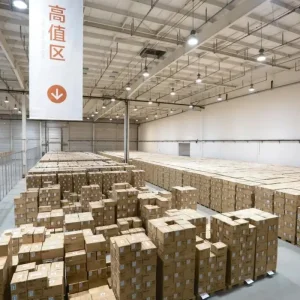
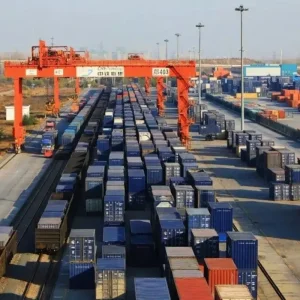
Delivering specialized international forwarding architectures across maritime, intermodal rail, and specialized freight pipelines worldwide.






Understanding the shifting dynamics of global commercial and industrial automobile logistics originating from mainland production centers.
Pure Car and Truck Carrier (PCTC) capacity has experienced systemic crunches. Modern exporters must blend dedicated Ro-Ro operations with multi-car container loading schemes to hedge charter rate volatility and secure maritime slots.
Electric vehicle (EV) transit demands rigorous Class 9 Dangerous Goods (UN 3171 / UN 3481) compliance. From thermal runaway barriers to specific State of Charge (SoC) management (below 30%), standard car logistics has morphed into a high-spec hazardous transit workflow.
Assessing the cost to ship a car overseas requires dissecting ocean base freights, port handling charges (THC), custom vehicle crating, destination unlashing, inland haulage, customs tariffs, and local road-worthiness certification charges under DDP/DDU models.
Quantified transit windows, loading profiles, and budget parameters across key global destination ports from Tier-1 Chinese terminals (Shanghai, Ningbo, Guangzhou).
| Transit Lane / Trade Corridor | Primary Transport Mode | Typical Transit Time | Estimated Base Cost Range (USD) | Key Regulatory & Handling Demands |
|---|---|---|---|---|
| China → North America (West Coast) | 40HC Racked Container (2-3 Units) | 15 – 22 Days | $2,200 – $3,800 / Unit | DOT/EPA clearance, title validation, ISF 10+2, Battery disconnect protocols. |
| China → European Hubs (Rotterdam/Hamburg) | PCTC (Ro-Ro) or Rail Intermodal | 28 – 38 Days (Sea) / 18 Days (Rail) | $2,400 – $4,200 / Unit | EU type approval compliance, CE marking, customs duties (10%) + local VAT. |
| China → Middle East (Jebel Ali / Dammam) | PCTC (Ro-Ro) & FCL Flat-Rack | 18 – 25 Days | $1,600 – $2,800 / Unit | SASO / GCC Conformity Certificates (CoC), sand filtration sealing. |
| China → Southeast Asia (Singapore / Laem Chabang) | Dedicated Car-Carrier / Short Sea LCL | 5 – 10 Days | $900 – $1,600 / Unit | Form E preferential tariff regimes, Right-Hand Drive (RHD) customs audits. |
| China → Latin America (Manzanillo / Callao) | 40HC Containerized Cassettes | 28 – 40 Days | $2,600 – $4,500 / Unit | Phytosanitary wood fumigation (ISPM 15), non-commercial import declarations. |
Technical engineering deployed at terminal yards to eliminate transit shocks, oxidation, and chassis displacement during maritime passage.
By leveraging certified internal steel racking cassettes, three sedans or two full-size SUVs can be securely nested into a single 40ft High Cube container. Wheel chocks, polyester lashing straps with 5,000 kg breaking force, and anti-rebound buffer mats protect high-gloss paint finishes and suspension alignment.
Ideal for commercial fleets and commercial truck exports. Vehicles are driven directly into the internal ramp networks of multi-deck car carriers. All vehicles undergo strict pre-loading battery insulation checks, tire pressure stabilization, and drive-train immobilization under low-salinity hold conditions.
Transoceanic passages subject auto bodies to extreme thermal cyclings and high sea-salt humidity. High-value classic sports vehicles and prototype electric cars utilize Volatile Corrosion Inhibitor (VCI) films and desiccated container microclimates to negate electrolytic oxidation across undercarriages.
Leveraging the structural infrastructure of mainland manufacturing centers with coastal maritime clusters to drive down unit export overheads.
Consolidated yard staging in Ningbo-Zhoushan, Shanghai Yangshan, and Shenzhen provides uninterrupted container stuffings, on-dock rail connectivity, and high-frequency sailings that reduce dockside dwell times by up to 40%.
Dedicated processing facilities verify Vehicle Identification Numbers (VIN), calibrate battery safety systems, conduct multi-point cosmetic inspections, and complete strict export customs pre-manifests within 24 hours of factory gate dispatch.
Seamlessly alternate between maritime routes and China-Europe Railway Express (CR Express) transit corridors based on geopolitical developments, canal bottlenecks, and urgent consumer vehicle release schedules.
Consolidated booking agreements with ocean alliances (2M, Ocean Alliance, THE Alliance) unlock wholesale ocean freight tiers, mitigating unexpected terminal ancillary surcharges and demurrage exposures.
How telematics, IoT sensors, and decentralized ledger verification are revolutionizing end-to-end car exportation from China.
Integration of containerized IoT modules tracking real-time triaxial G-force shock events, ambient moisture, thermal variations, and container seal status across high-seas transit corridors. Immediate alerts pinpoint rough crane handling or severe maritime swells.
Transition from physical, slow paper documentation to paperless cryptographic eBL frameworks. Digital asset transfer guarantees instantaneous ownership handovers at destination ports, eliminating demurrage charges caused by delayed courier documentation.
Establishment of automated vehicle battery balancing nodes within export free trade zones (FTZs). Guarantees that export EVs meet international maritime hazard regulations while protecting battery health against deep discharge degradation during 45-day shipping windows.
Mitigating commercial friction through expert global customs representation, homologation guidance, and comprehensive marine risk transfer.
Navigating vehicle entry demands technical precision: HS Code 8703 categorization, verifying Certificate of Conformity (COC), engine displacement checks, emissions standard verifications (Euro VI / US Tier 3), and managing localized tariff concessions (e.g., ASEAN Form E). Our local customs brokerage networks handle full paperwork clearance prior to vessel berthing.
Standard carrier liability fails to adequately cover high-value automotive cargo in the event of vessel casualties or general average declarations. We structure comprehensive Marine Cargo Insurance (Institute Cargo Clauses A - All Risks), including full coverage for loading, ocean transit, intermediate transshipment, vehicle unlashing, and final-mile car transporter delivery.
Key technical and pricing inquiries handled by our engineering and maritime forwarding operations teams.
Reliable multimodal logistics pipelines connecting Asian manufacturing nodes with global commercial marketplaces.