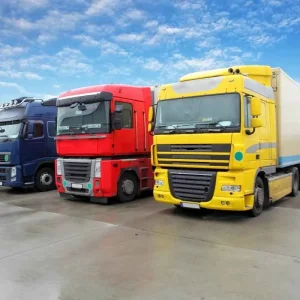
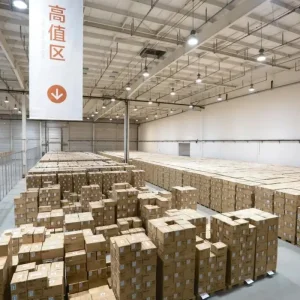
Verified door-to-door transit channels engineered for cross-border wholesale consignments, Amazon FBA fulfillment, and multimodal overland connections.






Years Operational Expertise in Cross-Border Logistics
Tier-1 Port Cities Integrated in Origin Agency Network
Global Jurisdictions & Inland Territories Reached
Logistics Engineers & Customs Clearance Specialists
Synchronized Multilingual Real-Time Telemetry Tracking
The contemporary landscape of global trade is defined by compressed inventory cycles, heightened regulatory scrutiny, and shifting geopolitical corridors. For multinational enterprises, e-commerce conglomerates, and industrial procurement departments, acquiring manufactured finished goods or critical intermediate assemblies from China is no longer merely a commercial purchasing transaction—it is an intricate exercise in risk management and logistical orchestration. As factories migrate across inland industrial belts such as Sichuan, Hubei, and Henan while coastal epicenters in Guangdong, Zhejiang, and Jiangsu specialize in precision engineering and high-throughput export manufacturing, the role of a premier China export freight forwarder has shifted from a broker of cargo space to an indispensable supply chain technology architect.
Global procurement teams face structural complexities, including stringent customs compliance regimes under US CBP, European UCC Union Customs Code, and Middle Eastern ZATCA portals. In parallel, cross-border sellers must navigate unpredictable ocean freight spot indices, volatile maritime security corridors, and strict Amazon FBA carton-level standards. Consequently, leading forwarders must offer unified data transparency, inland factory consolidation capabilities, automated tariff engineering, and end-to-end Delivered Duty Paid (DDP) execution that fully shields the importer from transit unpredictability.
Enterprise procurement commonly aggregates sub-assemblies and finished SKUs across dozens of independent Chinese manufacturers. Forwarders operate advanced consolidation warehouses in Yiwu, Shenzhen, and Shanghai to conduct incoming inventory verification, pallet rebuilding, barcode scanning, and unified export declaration, mitigating baseline shipping costs by up to 34%.
Cross-border customs inspections often lead to demurrage, customs holds, and compliance fines. Strategic export partners apply pre-cleared HS Code mapping, dual-use component verification, export license sponsorship, and proactive Lacey Act or Section 301 audit structures to maintain unimpeded container throughput at major sea and air ports.
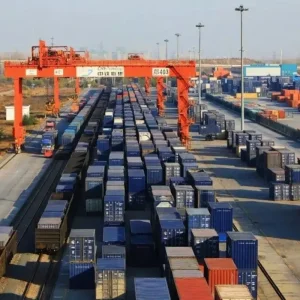
Modern supply chains require dynamic routing algorithms capable of shifting cargo between express airfreight, deferred air cargo, sea-air combinations, China-Europe Railway Express (CR Express), and expedited ocean loops (such as Matson CLX or expedited FCL lines) to reconcile seasonal stock deadlines with overall landed-cost targets.
Operational trade-offs across core transport modalities originating from Chinese export hubs to primary destination continents.
| Transport Modality | Primary Gateways (Origin → Destination) | Typical Transit Time | Customs Model | Optimal Cargo Archetype & Volume |
|---|---|---|---|---|
| Express Couriers | PVG, SZX, HKG → Direct to Worldwide Distribution Hubs | 3 – 4 Days | DDP / Section 321 Type 86 | Urgent production samples, prototypes, critical electronic parts (< 100 kg) |
| Direct Air Freight | PVG, CAN, CKG → LAX, ORD, FRA, AMS, DXB | 7 – 12 Days | Pre-clearance Commercial DDP/DDU | High-value consumer tech, seasonal apparel rollouts, stockout emergencies |
| Expedited Ocean FCL | Ningbo, Shanghai → Long Beach, Los Angeles (Pier 400) | 15 – 18 Days | Continuous Bonded Port Clearance | High-velocity Amazon FBA fast-replenishment, big-box holiday retail campaigns |
| CR Railway Express | Xi'an, Chengdu, Zhengzhou → Duisburg, Malaszewicze, Lodz | 16 – 22 Days | Unified CIM/SMGS Railway Consignment | Industrial machinery, automotive spare parts, chemical precursors to the EU |
| Standard Ocean LCL/FCL | Shenzhen, Qingdao, Tianjin → Rotterdam, Felixstowe, Sydney | 25 – 32 Days | Formal Ocean Manifest Entry | Bulky goods, furniture, home appliances, standard cyclical industrial replenishment |
Supply Chain Engineering Tip: By using a synchronized Air-Sea Split Ingestion Model, procurement teams can route 15% of newly manufactured units via Air Freight to capture initial retail launch dates while routing the remaining 85% via Standard Ocean FCL, driving down aggregate landed freight costs by over 47% relative to pure-air commitments without losing early market momentum.
Transitioning from manual forwarding processes to fully digitized, self-correcting logistics data pipelines.
Machine-learning OCR engines rapidly parse commercial invoices, multi-supplier packing lists, and MSDS sheets into machine-readable XML structures, generating accurate customs declarations within minutes while identifying tariff mismatches.
Cellular and satellite IoT transponders embedded in container shipments record continuous coordinates, internal temperature, humidity levels, and shock vectors, providing tamper evidence for medical, battery, and high-precision freight.
Historical berth availability records and satellite AIS tracking feed machine-learning models to predict maritime port bottlenecks 7 to 10 days in advance, allowing automated inland re-routing before containers encounter terminal dwell penalties.
Direct API integration with Amazon Carrier Central automatically requests, modifies, and confirms final-mile cross-dock appointments based on real-time customs release signals, avoiding missed delivery windows and FBA receiving surcharges.
How rigorous documentation protocols protect overseas buyers against regulatory audits, port holds, and supply disruptions.
A primary friction point when importing from China is the disconnect between Chinese factory-floor practices and destination customs enforcement. Chinese manufacturers often prioritize local export formalities without verifying destination-market standards, such as California Proposition 65 labeling, EU CE markings, UKCA requirements, or strict battery transport guidelines under UN 38.3. A qualified China export freight forwarder functions as a regulatory firewall at origin.
Through comprehensive origin audits, cargo containing lithium-ion cells, integrated battery packs, or magnets is verified against manufacturer MSDS and UN 38.3 test summaries before loading. This verification step prevents origin airport security rejections and avoids vessel holds enforced by carrier lines such as Maersk, COSCO, or MSC. Furthermore, when shipments move under Delivered Duty Paid (DDP) terms, the forwarder manages import declarations, anti-dumping checks, and destination VAT/GST liabilities, giving overseas buyers clear landed unit costs without lingering tax exposure.
Every commercial invoice undergoes multi-jurisdiction HS code verification to confirm tariff sub-headings, Section 301 exclusions, and relevant bilateral agreements, ensuring accurate duty calculations and avoiding audit penalties.
Certified Dangerous Goods inspectors handle battery-powered cargo, aerosols, and magnetic materials according to IATA DGR and IMO IMDG standards, preparing dedicated DG declarations, safe packaging, and secure airline handling.
Through our dedicated insurance brokerage network, shipments are protected under comprehensive Institute Cargo Clauses (A) 'All Risks' cover, shielding buyers against general average, theft, catastrophic vessel loss, and rough weather damage.
Key operational and commercial considerations for corporate procurement and import managers working with Chinese forwarders.
Comprehensive ocean logistics, Canadian FBA connections, risk-hedging insurance consultations, and regional multi-modal hubs.