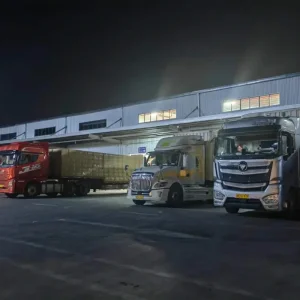
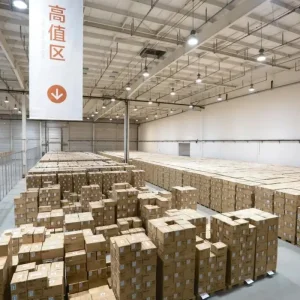
Precision execution across sea, air, rail, and integrated warehousing ecosystems designed for seamless supply chain velocity.


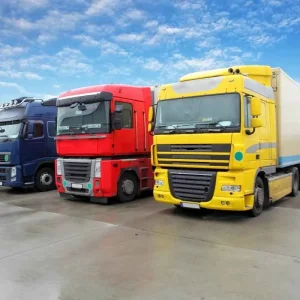
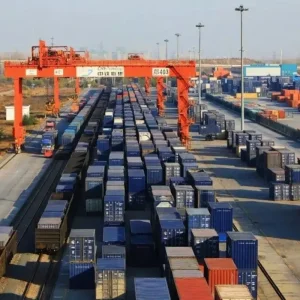




Modern international freight economics is no longer a simple static tariff calculation. It is a dynamic intersection of carrier alliances, capacity fluctuations, fuel indexes, and localized customs clearance barriers.
Basic ocean rates represent only the baseline. Total freight charges are dictated by the Bunker Adjustment Factor (BAF), General Rate Increases (GRI), and Peak Season Surcharges (PSS). Forward-thinking procurement teams require a forwarder capable of indexing and locking quarterly space commitments to mitigate extreme spot-rate swings.
Terminal Handling Charges (THC), container yard gate fees, and customs manifest filings (AMS/ISF for North America, ENS for Europe) constitute foundational origin charges. Optimized warehouse staging across Shenzhen, Yiwu, and Shanghai allows cross-dock consolidation that slashes unnecessary LCL handling overhead.
Import duty assessments under Harmonized Tariff Schedules (HTS), Value-Added Tax (VAT), merchandise processing fees (MPF), and harbor maintenance fees (HMF) represent substantial landed capital. Operating via a licensed DDP specialist bundles customs liabilities, eliminating surprise secondary invoicing upon arrival.
The international sourcing paradigm has evolved from lowest-unit-cost chasing to total landed cost resilience and near real-time operational flexibility.
China's modern manufacturing heartlands utilize automated MES systems, IoT-enabled assembly pipelines, and digitized component tracking. This algorithmic precision demands logistics integration at the source, matching production schedules with sea and air shipping windows to eliminate idle stock dwell time.
Global enterprise buyers are establishing dual-track routing strategies. While high-volume baselines move via economical FCL ocean transit, demand surges, seasonal spikes, and high-margin replenishment leverage express multimodal air and the trans-continental China-Europe Railway Network.
Evolving global trade laws—including strict origin verification, battery transit certifications (UN38.3, MSDS), and anti-dumping scrutinies—require freight partners with localized regulatory intelligence to guarantee rapid entry clearances across European and American gateways.
Align transit lead times, volumetric thresholds, and pricing structures directly to your SKU commercial profiles.
| Logistics Freight Mode | Typical Global Lead Time | Primary Charge Mechanics | Target Enterprise SKU Profile | Risk Level |
|---|---|---|---|---|
| Express International Courier | 3 – 4 Days | Gross Weight vs Dimensional (1:5000) | Critical engineering prototypes, high-value electronics | Very Low |
| Scheduled Air Freight | 7 – 12 Days | Chargeable Weight (Volumetric 1:6000) | Rapid replenishment inventory, time-critical consumer goods | Low |
| China-Europe Rail Freight | 16 – 22 Days | Per Cubic Meter (CBM) / Container | Mid-value industrial components, automotive parts | Controlled |
| Direct Fast Ocean Line | 15 – 18 Days | TEU / FEU / Fractional CBM (LCL) | E-commerce fast-movers, high-volume seasonal inventory | Moderate |
| Standard Sea Freight (FCL/LCL) | 25 – 35 Days | Per Unit Volume (CBM) or Full Container | Bulk consumer commodities, industrial raw materials | Standard |
Tailored delivery protocols engineered to conform to regional fulfillment standards and customs regimes.
Strict automated fulfillment center appointment windows require pre-palletized, carton-marked precision. Our localized drayage network handles fast sea carriage straight to LA/Long Beach ports, followed by bonded off-dock de-consolidation and dedicated carrier line-hauls directly into Amazon sorting centers.
The EU Import One-Stop Shop (IOSS) and modern customs clearance requirements demand clean entry handling. Goods routed via Hamburg, Rotterdam, or through Poland's rail corridors are pre-cleared, with import duties and VAT fully disbursed under our single-contract umbrella.
Supporting manufacturing shifts and nearshoring operations, our direct short-sea routes and Pacific container corridors connect Chinese Tier-2 and Tier-3 suppliers with distribution centers in Monterrey, Mexico City, and key ASEAN industrial parks.
Authoritative guidance on international shipping charges, Incoterms, customs handling, and cargo risk control.
Reliable international fulfillment, bonded warehousing, and cross-border delivery infrastructure scaled for enterprise commerce.