Instant guaranteed allocations, contracted direct carrier allocations (BCO), and duty-paid turnkey solutions origin-loaded across Chinese deepwater ports.





Navigating modern container shipping requires an algorithmic understanding of ocean freight line-item surcharges, carrier alliances (2M, Ocean Alliance, Premier Alliance), and the true landed cost formula.
A legitimate freight quotation from a certified China NVOCC is never just a single figure. It integrates Basic Ocean Freight (BAS), Bunker Adjustment Factors (BAF/EBS), Currency Adjustment Factors (CAF), Peak Season Surcharges (PSS), and Origin Terminal Handling Charges (OTHC). Without granular line-item transparency, importers face surprise downstream detention, chassis split fees, and PierPass charges.
Top-tier exporters in China maintain dual contractual models: Named Account (NAC) BCO contracts with ocean giants (COSCO, Evergreen, Maersk, MSC, ONE) paired with spot market dynamic hedging. When maritime bottlenecks strike Ningbo or Shanghai, volume-backed forwarders secure priority rolled-pool allocations, ensuring your boxes don't linger across transit berths.
For cross-border e-commerce brands, high-velocity distributors, and retail importers, freight volatility is lethal to gross margin predictability. True Delivered Duty Paid (DDP) modeling bundles maritime freight, export documentation, international marine cargo cover, destination customs clearance, and inland drayage into a definitive per-unit or per-CBM unit rate.
How dynamic API rate distribution, IoT smart containerization, and predictive ETA modeling are replacing legacy PDF freight sheets and opaque booking windows.
Direct EDI/API pipelines connecting shipping line yield management systems with freight quoting interfaces, refreshing spot index rates instantly against vessel capacity utilization.
Autonomous sensor tracking embedded in refrigerated and dry containers recording shock, ambient humidity, temperature, and door-opening alerts with satellite uplinks mid-Pacific.
Paperless electronic Bills of Lading (eBL) backed by distributed ledger infrastructure, eliminating courier transit lag, reducing fraud, and unlocking instantaneous customs release.
Automated carbon scoring tracking Carbon Intensity Indicator (CII) ratings per vessel voyage and calculating EU Emissions Trading System (ETS) green fuel surcharge additions down to the kilogram.
China’s maritime dominance is rooted in deep industrial integration—where smart manufacturing clusters align seamlessly with world-leading automated deep-water container berths.
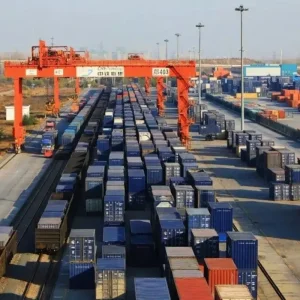
Connecting the industrial powerhouses of Jiangsu, Zhejiang, and Anhui via high-density inland waterways and rail feeders. Shanghai Yangshan Phase IV—the planet’s largest automated terminal—combined with Ningbo-Zhoushan deepwater berths, ensures 24/7 turnaround with zero draft constraints for ultra-large container vessels (ULCVs) exceeding 24,000 TEUs.
Specialized in consumer electronics, IoT hardware, and high-value consumer goods. Ports like Yantian and Shekou offer express trans-Pacific services with sub-12 day transit times to US West Coast base ports (LA/Long Beach). Direct bonded warehouse corridors in Shenzhen facilitate consolidated stuffing from hundreds of sub-tier suppliers into single FCL boxes.
Heavy industry, renewable energy hardware, photovoltaic (PV) modules, and raw material logistics. Qingdao Port leads world benchmarks in automated crane moves per hour, backed by dedicated dangerous goods (DG) container storage and reefer infrastructure servicing global cold-chain and hazardous chemical exporters.
Maximize volumetric efficiency and eliminate dead-freight costs by selecting the precise ocean equipment for your China export manifests.
| Equipment Type | Internal Dimensions (L × W × H) | Door Opening (W × H) | Cubic Capacity (CBM) | Max Payload (kg) | Optimal Cargo Profiles |
|---|---|---|---|---|---|
| 20' General Purpose (20GP) | 5.898 × 2.352 × 2.393 m | 2.343 × 2.280 m | 33.2 CBM | 28,180 kg | Heavy, dense cargo (minerals, machinery, liquids, tiles) |
| 40' General Purpose (40GP) | 12.032 × 2.352 × 2.393 m | 2.343 × 2.280 m | 67.7 CBM | 26,750 kg | Standard general cargo, textiles, medium-density items |
| 40' High Cube (40HQ) | 12.032 × 2.352 × 2.698 m | 2.343 × 2.585 m | 76.3 CBM | 26,580 kg | Voluminous e-commerce cartons, furniture, apparel |
| 45' High Cube (45HQ) | 13.556 × 2.352 × 2.698 m | 2.343 × 2.585 m | 86.0 CBM | 25,600 kg | Lightweight bulk, retail displays, oversized packaging |
| 40' Reefer (Cold Chain) | 11.583 × 2.286 × 2.532 m | 2.290 × 2.535 m | 67.0 CBM | 29,400 kg | Pharmaceuticals, perishable foods, temperature-sensitive resins |
When maritime chokepoints like the Red Sea, Suez Canal, or Panama Canal disrupt standard liner rotations, agile forwarders deploy synthetic multimodal networks.
When the Cape of Good Hope detour adds 10–14 days to European maritime transit, our block trains connecting Chongqing, Chengdu, and Xi'an to Duisburg, Hamburg, and Malaszewicze provide a predictable 14–18 day alternative at roughly one-third the cost of air cargo.
Under the Regional Comprehensive Economic Partnership (RCEP), intra-Asia supply chains require rapid turnaround. Direct short-sea corridors from Shanghai and Shenzhen to Haiphong, Bangkok, Singapore, and Jakarta operate daily departures with minimal customs hurdles.
Fast-boat ocean services (Matson CLX, CMA CGM EXX, EMC HTX) offer dedicated off-dock container yards at Los Angeles and Long Beach with chassis guarantees, enabling same-day terminal pickup without PierPass delays for critical retail replenishments.
From HTS classification audits to dangerous goods declarations, our trade compliance framework shields importers from severe customs penalties, seizures, and unexpected tariffs.
Pre-shipment verification of 10-digit Harmonized Tariff Schedule (HTS) codes, identifying correct anti-dumping duty (ADD) exclusions, Section 301 tariff categories, and preferential FTA duties.
Automated Automated Manifest System (AMS) and Importer Security Filing (ISF 10+2) transmissions completed 24+ hours prior to origin vessel departure, eliminating $5,000 CBP penalty exposures.
Certified handling of Class 9 dangerous goods, UN3480/UN3481 lithium-ion batteries, and magnetic cargo with authenticated MSDS, UN38.3 test summaries, and carrier packaging compliance.
Direct integration with continuous customs entry bonds, destination VAT/GST deferment accounts, and transparent fiscal representation across EU Member States and the UK.
How corporate procurement heads and supply chain VPs evaluate and secure resilient ocean freight supplier agreements from China.
Enterprise contracts must negotiate a minimum of 14 to 21 combined demurrage and detention free days at destination ports. Port congestion and terminal rail-head delays can quickly generate daily per-container penalties ranging from $150 to $350. Proactive forwarders establish inland container depot (ICD) restitution rights to protect your operating budget.
World-class freight procurement frameworks mandate strict operational milestones: 24-hour booking confirmation turnaround, origin pickup execution within 48 hours of cargo readiness date (CRD), draft bill of lading delivery within 24 hours of vessel departure, and real-time electronic milestone reporting via webhooks or automated EDI feeds.
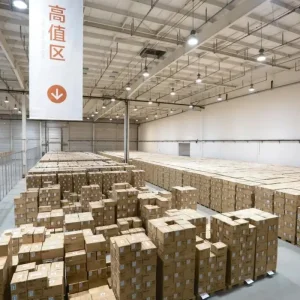
For buyers purchasing from 10 to 30 manufacturing facilities across China, coordinating multiple LCL shipments destroys margin through duplicate base fees. Centralizing cargo into our domestic consolidation warehouses in Shenzhen, Yiwu, or Shanghai enables single-box stuffing into 40HQ containers, slashing freight and clearance overhead by up to 38%.
Clear, authoritative insights from our senior maritime logistics specialists to resolve complex international shipping questions.
Direct factory-to-fulfillment delivery, comprehensive bonded warehousing, and dedicated Amazon FBA ocean and air forwarding options.







Connect directly with our Shanghai operations desk. Obtain a validated landed-cost analysis, guaranteed vessel space allocation, and tailored DDP tariff modeling within two business hours.
