Direct tier-1 contracted carrier space, end-to-end multi-modal routing, and real-time wholesale freight forwarding solutions engineered for seamless inventory turnover.
Deconstructing the landed expenditure architecture: eliminating opaque surcharges through contract-level transparency, consolidated consolidation, and risk-adjusted shipping models.
Wholesale logistics costs extend far past the maritime ocean bill or airway charge. True unit landed expenditure comprises base linehaul, fuel adjustment factors (BAF), currency adjustment factors (CAF), terminal handling charges (THC), automated manifest system fees (AMS/ISF), entry filing bonds, and peak season surcharges (PSS). Evaluating suppliers under holistic DDP parameters provides transparent per-SKU budgeting.
From maritime detours around the Cape of Good Hope to dynamic low-sulfur mandate compliances, international shipping capacity encounters volatility. A reliable wholesale agent leverages contracted block space agreements (BSA) directly with oceanic alliances and cargo airlines, guaranteeing allocation stability during global supply shocks and inventory spikes.
Choosing between Delivered Duty Paid (DDP) and Delivered Duty Unpaid (DDU/DAP) fundamentally impacts your fiscal exposure. While DDU pushes import tariff clearance, customs bonds, and VAT remittance to the destination receiver, turn-key DDP consolidates customs broker management, import duties, and port drayage under a fixed unified invoice, eradicating unexpected demurrage.
| Cost Parameter | Conventional LCL/FCL Ocean | Express Air Freight | Cross-Border Rail Freight | Meishe End-to-End DDP Model |
|---|---|---|---|---|
| Transit Time Target | 25 - 35 Business Days | 5 - 8 Business Days | 16 - 22 Business Days | Optimized to Demand Class |
| Customs & Duty Handling | Consignee Broker Filing | Carrier Broker Automated | Border Crossing Declarations | Fully Inclusive In-House Clearances |
| Demurrage / Detention Risk | High if paper delay occurs | Low (48h warehouse limits) | Moderate (Railhead handling) | Zero Destination Surcharge Risk |
| Cost-per-Kg Profile | Lowest Unit Cost Factor | Premium Investment Profile | Balanced Intermediate Curve | Wholesale Scaled Indexing |
Cross-border cargo execution demands strict adherence to regulatory architectures across sovereign borders, harmonized tariff schedules, and carrier handling standards.
Lithium-ion battery assortments (UN3480 / UN3481), magnetic equipment, fluids, and consumer electronics undergo intense screening at air terminals and oceanic inspection docks. We supply rigorous MSDS cross-validation, UN38.3 test summary audits, and DG packaging compliance, preventing vessel refusals or cargo impounding at points of origin.
Our localized infrastructure spans beyond Shanghai, Yiwu, and Shenzhen to incorporate deep-water access points including Ningbo-Zhoushan, Qingdao, Tianjin, and Guangzhou. Partner networks maintain bonded operations across key international destination gateways: Los Angeles, Long Beach, Rotterdam, Hamburg, Sydney, Manzanillo, and Jebel Ali.
General average declarations, container damage, and maritime transit hazards necessitate comprehensive marine cargo insurance. Through licensed brokerage consultation, importers secure all-risk clauses covering warehouse-to-warehouse transit, shielding enterprise working capital from seasonal disruptions and oceanic incidents.
How wholesale freight forwarding adapts to distinct commercial frameworks, enterprise inventories, and automated fulfillment ecosystems.
Direct-to-fulfillment-center appointments require exact pallet stacking heights, precise carton labels, and strictly calibrated delivery appointment slots via Carrier Central. We provide pre-clearance labeling, FBA carton scanning, and palletization across East and West Coast hubs, preventing warehouse intake non-compliance fines.
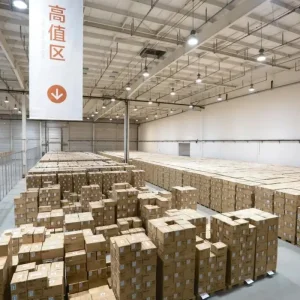
Procuring goods across disparate manufacturers across Ningbo, Yiwu, Foshan, and Dongguan generates elevated handling costs if shipped individually. Our domestic hubs consolidate heterogeneous shipments into single dedicated 40HQ containers, consolidating documentation fees and slashing linehaul expenditure by up to 38%.
When assembly operations in North America or Western Europe risk line stoppages due to precision tool deficiencies, standard sea logistics falls short. We integrate split-shipment protocols: dispatching urgent components via priority air express within 72 hours, while standard replenishment travels via ocean freight lanes.
The convergence of algorithmic freight brokerage, carbon footprint optimization, and end-to-end telemetry across multimodal logistics nodes.
Milestone automated API tracking directly into buyer ERP systems.
Direct regional relationships with bonded customs depots and port drayage.
Binding landed DDP terms guaranteeing predictability for importer margins.
Real-time shipment exception monitoring across global time zones.
Critical operational answers regarding volumetric weighting, customs responsibilities, tariff classifications, and delivery SLAs.
Air cargo adheres to IATA volumetric dimensional standards: (Length x Width x Height in cm) / 6000 (or 5000 for standard express couriers). Whichever value is greater between chargeable gross weight and dimensional volume becomes the billable baseline. Optimized master-carton engineering prevents excess dimensional inflation.
Under DDP (Delivered Duty Paid), the freight supplier assumes complete financial liability for import customs declaration, tariff remittance, destination terminal charges, and final delivery. Under DDU (Delivered Duty Unpaid / DAP), the buyer acts as the Importer of Record (IOR) and must settle all destination duties, clearance paperwork, and brokerage fees.
Yes. By strictly auditing manufacturer test documentation—including UN38.3 test summaries, Material Safety Data Sheets (MSDS), and proper outer packaging labeling—our network safely routes classified lithium batteries and electronic cargo through dedicated specialized air and ocean channels.
Less than Container Load (LCL) allows buyers to pay solely for the cubic meters (CBM) their inventory occupies within shared ocean containers. Through centralized warehouses in Shanghai, Shenzhen, and Yiwu, multi-supplier purchases are consolidated, eliminating separate individual minimum bill-of-lading fees.
Typical timelines span 3–4 days via expedited international express, 7–12 days for direct commercial air cargo, 15–18 days for fast ocean lanes to West Coast ports (e.g., LA/Long Beach), and 25–30 days for standard vessel calls into East Coast terminals, followed by scheduled dock appointments.
Carrier liability under international conventions (such as the Carriage of Goods by Sea Act or Warsaw Convention) is strictly limited to nominal weight thresholds. Comprehensive cargo insurance safeguards the actual declared commercial value of goods against catastrophic maritime loss, water damage, or transit accidents.
Comprehensive ocean freight, air express lanes, and specialized customs advisory mechanisms tailored to international enterprise buyers.