Direct bookings, scheduled vessel departures, dedicated consolidation hubs, and guaranteed customs clearance operations under single-source accountability.
The contemporary international logistics landscape has fundamentally transitioned from commodity capacity brokering to hyper-integrated digital orchestration. Modern international enterprises require certainty across turbulent global supply corridors.
Traditional freight forwarding functioned on reactive milestones and manual email updates. Today's high-velocity global supply chains require API-driven, continuous telematics. Our system monitors maritime congestion at major transit gateways like the Panama Canal, Suez Canal, and transshipment hubs like Singapore and Rotterdam, routing consignments proactively to avoid costly demurrage and chassis shortages.
With nearshoring and "China Plus One" dialogues reshaping industrial footprints, actual manufacturing depth remains centered within China's specialized industrial belts. Rather than disintermediating Chinese production, sophisticated importers use multimodal corridors—blending coastal ocean freight, China-Europe Railway corridors, and Southeast Asian cross-border road trucking—to secure cargo flows against geopolitical disruptions.
Global regulatory bodies, including the EU's Corporate Sustainability Due Diligence Directive (CSDDD) and maritime emissions frameworks (IMO 2023/2024), require accurate carbon accounting across Scope 3 freight logistics. By optimizing Full Container Load (FCL) packing cubes, deploying modernized low-emission transport assets, and providing transparent CO2 footprint declarations, we help enterprises remain compliant.
For international enterprise buyers, procurement executives, and omnichannel retail brands, freight forwarding is no longer evaluated solely on cost-per-kilogram or ocean container baseline rates. The actual friction point rests within Total Landed Cost volatility—unexpected demurrage fees, unpredictable tariff reclassifications, unannounced fuel surcharges, and inventory stock-outs caused by transshipment bottlenecks.
We eliminate these variables through deterministic pricing contracts and integrated operations. Our direct partnerships with major ocean alliances, commercial air cargo operators, and local drayage fleets allow enterprise procurement teams to lock in predictability across standard and peak seasons alike.
China's industrial landscape has transitioned from labor-intensive assembly to automated, connected Factory 4.0 smart manufacturing. High-efficiency production lines demand an equally sophisticated forwarding network capable of supporting Just-In-Time (JIT) production and automated inventory replenishment.
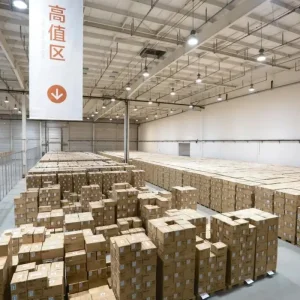
Our centralized receiving facilities in Shenzhen, Yiwu, and Shanghai operate as automated buffer hubs. Integrated with Warehouse Management Systems (WMS), we perform pre-shipment quality audits, carton dimension scans, standardized palletization, barcode relabeling, and digital customs documentation before your freight reaches the terminal gate.
Strategic Operational Benefit: Synchronizing our cross-docking hubs directly with your Chinese OEM/ODM suppliers shortens order-to-dispatch timelines from days to hours, mitigating warehouse inventory holding expenses across North America and Europe.
No single transportation mode fits every SKU or procurement deadline. We orchestrate air, ocean, rail, and highway assets into flexible logistics solutions balanced for cost, transit time, and operational reliability.
Direct service contracts across global ocean carriers (2M, Ocean Alliance, THE Alliance). We manage high-volume 20GP, 40GP, and 40HQ container movements alongside dedicated LCL consolidations, featuring guaranteed space allocations during peak seasonal shipping periods.
Scheduled direct freighter and passenger belly space capacity connecting Shanghai Pudong (PVG), Shenzhen (SZX), Hong Kong (HKG), and Beijing (PEK) to Tier-1 hubs across North America, Europe, Australia, and the Middle East in 3 to 7 business days.
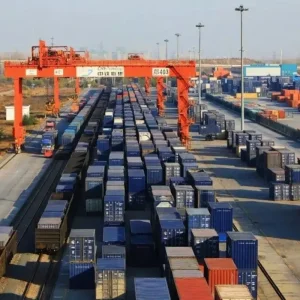
The strategic midpoint balancing air speed and ocean freight economy. Our China-to-Europe regular rail services deliver cargo to Germany, Poland, France, and Benelux distribution hubs in 14-20 days, cutting ocean transit times in half.
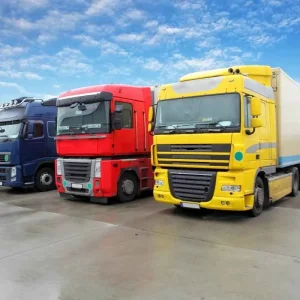
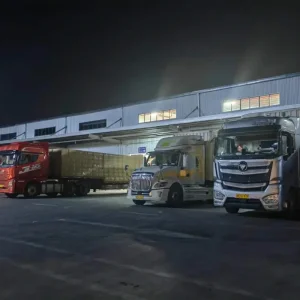
Bonded trucking networks reaching Southeast Asia (Vietnam, Thailand, Malaysia) via border gateways, backed by integrated last-mile carrier solutions (UPS, FedEx, dedicated 53ft dry vans) for dock deliveries straight to client warehouse facilities.
Operational excellence is proven through complex, real-world execution. Here is how our logistics network manages varied distribution challenges across major global industries.
Strict packaging, labeling, and delivery window requirements leave zero margin for error. We inspect carton marks, verify ASIN barcode placement, build standardized wood pallets, and secure scheduled dock appointments across all Amazon fulfillment centers in the US, Canada, EU, and Australia without delivery rejections.
Automotive assemblies, precision CNC tooling, and industrial electronics require temperature-stable, moisture-protected, shock-mitigated transport. We engineer moisture-barrier crating, calculate center-of-gravity stabilization for heavy machinery, and provide complete customs clearance documentation.
Navigating the complex international regulatory terrain of Class 9 Dangerous Goods, UN38.3 test summaries, and maritime hazardous declarations. We safely route lithium-ion batteries, solar power microinverters, and portable energy storage systems with dedicated space and documentation.
Direct operational answers to the most common strategic, fiscal, and logistical questions encountered by overseas importers and supply chain directors.
Under DDP (Delivered Duty Paid), the freight forwarder and seller assume complete financial and operational responsibility for the cargo from the factory gate to the consignee's receiving dock. This includes origin trucking, export customs, ocean/air freight, destination customs clearance, and the payment of all import tariffs, excise taxes, and VAT/GST. Consignees receive goods without any administrative friction. Under DDU (Delivered Duty Unpaid), the forwarder manages transport to the destination facility, but the consignee acts as the Importer of Record (IOR) and must settle customs duties and local taxes directly with customs authorities.
International carriers determine freight charges using Chargeable Weight, which is the greater of actual gross weight (in kg) or volumetric weight. In air freight, the standard volumetric ratio is 1:6000 (Length x Width x Height in cm / 6000 = Volumetric Weight in kg), whereas express courier modes apply 1:5000. In ocean LCL shipping, 1 Cubic Meter (CBM) typically equates to a maximum allowance of 1000 kg (1 Ton). Our warehousing staff scan each carton upon arrival to optimize consolidation packing and minimize dimensional weight charges.
Yes. Multi-supplier cargo consolidation is one of our primary core competencies. Overseas buyers often purchase goods from multiple specialized manufacturing plants located across different industrial provinces (such as hardware from Ningbo, electronics from Shenzhen, and textiles from Shaoxing). We coordinate local factory pickups, receive shipments at our centralized consolidation hubs in Shanghai, Yiwu, or Shenzhen, verify packing lists, combine the cargo into a single ocean container or consolidated air shipment, and file one unified export declaration, saving substantial customs entry and clearance costs.
Commodities containing lithium batteries (UN3480, UN3481, UN3090, UN3091) or magnetic assemblies require strict documentation before carrier acceptance: a valid Material Safety Data Sheet (MSDS), UN38.3 Test Summary Report, and an Official Certification for Safe Transport of Chemical Goods by Air or Sea. Goods with magnetic fields must pass magnetic flux testing showing emissions below 0.00525 gauss at a distance of 4.6 meters. Our dangerous goods specialists inspect testing certificates and label shipments in full compliance with IATA and IMO standards.
Standard carrier liability is strictly limited under maritime and aviation conventions (such as the Carriage of Goods by Sea Act - COGSA, which limits carrier liability to just $500 per package, or the Montreal Convention for air freight). Furthermore, maritime law enforces the principle of General Average, where all cargo owners aboard a vessel share the losses if cargo is jettisoned during a life-or-ship emergency at sea. Our marine cargo insurance brokerage covers shipments door-to-door against all risks (Institute Cargo Clauses A), protecting your working capital against rough handling, vessel distress, container wash-overs, or transit delays.
Explore our specialized regional trade lanes, intermodal rail lines, dedicated warehouse logistics, and global FCL vessel services.