High-throughput express corridors, duty-prepaid import matrices, and direct fulfillment infrastructure engineered for cross-border enterprise sourcing.







Navigating structural bottlenecks, capacity reallocation, and digital freight compliance across contemporary worldwide cross-border ecosystems.
The contemporary wholesale global express delivery paradigm is undergoing a fundamental structural transition. Historically, international air express operated as an emergency contingency reserve—leveraged almost exclusively when maritime supply lanes experienced catastrophic delay or when ultra-high-value electronic SKUs required condensed cash-to-conversion cycles. In the present industrial arena, however, global commerce necessitates an integrated, high-velocity hybrid approach. Cross-border omnichannel distribution, just-in-time manufacturing (JIT), decentralized inventory buffers, and instantaneous digital platform commitments have elevated global express freight into a core operational pillar.
Geopolitical recalibrations, volatile airspace corridors, and shifting customs regimes—including heightened scrutiny under Section 321 de minimis thresholds in North America and stringent Import One-Stop Shop (IOSS) validations within the European Union—have introduced systemic friction. Global shippers can no longer depend on fragmented logistics chains where documentation brokers, line-haul carriers, and last-mile drayage operators work in dislocated silos. True supply chain resilience requires an authoritative, end-to-end global express partner capable of binding origin factory pickups directly to destination fulfillment docks under unified liability and programmatic visibility.
Express transit contracts compress inventory cash-to-cash turnaround from 45 days down to sub-96-hour intervals, radically minimizing enterprise balance-sheet exposure to stranded working capital.
Proactive tariff classification, preliminary automated clearance filing, and duty-prepaid (DDP) structures eliminate port-of-entry retention penalties, administrative audits, and demurrage costs.
By bypassing congested regional break-bulk sea hubs, wholesale air express allows direct injection into regional tier-1 fulfillment networks (such as Amazon FBA, Walmart WFS, and localized 3PLs).
Decoupling the structural mechanics behind China's origin efficiency: how upstream manufacturing density matches rapid physical forwarding infrastructure.
The strategic supremacy of sourcing through a China-based wholesale express partner lies not merely in raw freight rates, but in the physical co-location of manufacturing clusters and specialized export nodes. China's industrial geography features tightly knit regional ecosystems: consumer electronics in the Pearl River Delta (Shenzhen, Dongguan), precision tooling and industrial hardware in the Yangtze River Delta (Shanghai, Ningbo, Suzhou), and rapid small-commodity aggregation in Yiwu.
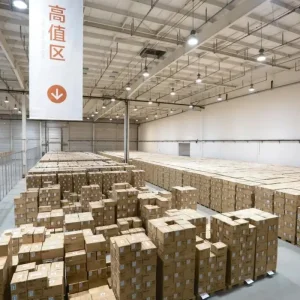
Because manufacturing facilities operate within brief trucking radiuses of our key transit sorting hubs, dwell times between production line offloading and export flight manifest registration are reduced from days to a handful of hours. Our cross-dock consolidation centers in Shenzhen, Yiwu, and Shanghai provide automated quality inspection, dimensional verification, secondary repackaging, barcode/carton relabeling, and hazardous-materials documentation (including lithium-battery UN38.3 protocols).
Years of Senior Cross-Border Freight Engineering
Global Partner Port Cities Directly Synchronized
Sovereign Jurisdictions Reached via Certified DDP
Continuous Multi-Timezone Tracking Support
Strategic trade corridor engineering: aligning last-mile protocols with local regulatory and platform prerequisites.
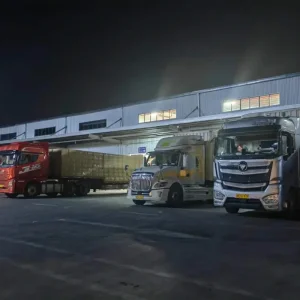
Navigating stringent appointment booking systems (Carrier Central), floor-loaded container drayage, and palletized dock delivery across major hubs (ONT8, LAX9, FTW1, IND9, YVR3). Integrated DDP services manage automated entry filings, bond administration, single continuous bonds, and tariff calculations prior to touchdown.
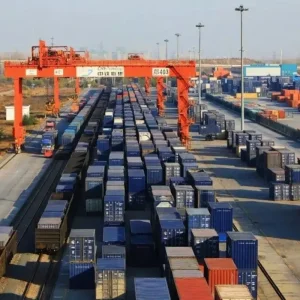
Addressing EU Customs Code modernization, Import Control System 2 (ICS2) data pre-loading, and comprehensive Value Added Tax (VAT) settlement. Multimodal combinations pair high-priority express air freight with scheduled China-Europe Railway corridors for an optimal balance of lead time and volume pricing.
Managing Australian biosecurity standards, BMSB fumigation verification, and direct GST remittance. Fast-growing ASEAN routes utilize bonded cross-border trucking corridors from South China into Vietnam, Thailand, and Malaysia, alongside air services direct into GCC customs hubs.
| Service Mode | Standard Transit Time | Primary Use Case & Payload Profile | Incoterms Supported | Customs Clearance Mechanism |
|---|---|---|---|---|
| Global Air Express | 3 – 5 Business Days | High-value tech components, samples, emergency stockouts | DDP, DDU, DAP | Automated manifest pre-clearance prior to landing |
| Standard Air Cargo | 7 – 12 Days | Predictable e-commerce seasonal inventory, medium payloads | DDP, DDU, CIF, FOB | Consolidated terminal broker clearance & line-haul delivery |
| China-Europe Rail Express | 16 – 22 Days | Industrial machinery, heavy raw goods, eco-conscious supply | DDP, DAP, FOR | Bilingual transit clearing (Alashankou/Malaszewicze) |
| Fast Ocean Freight (Matson/Direct) | 14 – 18 Days | High-velocity carton inventory, Amazon FBA bulk staging | DDP, CIF, FOB | Off-dock container yard priority gate-out & appointment drayage |
| Standard Ocean Freight (FCL/LCL) | 25 – 35 Days | Cost-minimized bulk stock, recurring replenishment pallets | FCL, LCL, DDP, EXW | Conventional marine terminal discharge & bonded trucking |
A strategic blueprint for identifying structural cost drivers, avoiding hidden surcharges, and establishing service-level commitments.
Enterprise shippers often suffer invoice inflation due to aggressive volumetric weight conversions. Transparent wholesale forwarders clarify whether air freight density is assessed at the standard IATA ratio of 1:6000 (167 kg per cubic meter) or the commercial express divisor of 1:5000 (200 kg per CBM). We engineer precision crating and vacuum-packaging consolidation at our origin hubs to eliminate billable empty space.
Quoted port-to-port pricing can be obscured by origin handling fees, terminal handling charges (THC), chassis split fees, peak season surcharges (PSS), and currency adjustment factors (CAF). True DDP contractual frameworks deliver clear landed costs per unit, absorbing origin handling, maritime/air transit, import brokerage, customs tariffs, and last-mile carrier injection into a transparent single-line tariff.
With consumer devices universally relying on lithium-ion power sources, freight forwarders must possess certified Dangerous Goods (DG) compliance capabilities. Undeclared or improperly manifested lithium cells risk cargo confiscation and carrier blacklisting. Our facilities verify UN38.3 test summaries, Material Safety Data Sheets (MSDS), and proper PI965–PI970 packing declarations before line-haul booking.
International conventions (such as Warsaw, Montreal, or Hague-Visby rules) limit basic carrier liability to token amounts per kilogram. Enterprise supply chain procurement demands comprehensive, all-risk Institute Cargo Clauses (Clause A) coverage. Our integrated insurance brokerage ensures high-value payloads are protected against loss, physical damage, and general average claims from factory departure to final delivery scan.
How intelligent routing engines, real-time IoT sensors, and regulatory decarbonization are transforming cross-border distribution.
Machine learning models continuously evaluate flight schedule reliability, port terminal dwell times, weather patterns, and customs inspection queues to re-route express cargo through alternative transit nodes before bottlenecks cause costly transit delays.
High-value industrial electronics, medical hardware, and sensitive cargo are monitored via real-time cellular and satellite IoT sensors, tracking geographic positioning alongside temperature, humidity, shock impact, and container integrity.
With corporate ESG disclosures and the European Carbon Border Adjustment Mechanism (CBAM) expanding, wholesale express operators are adopting Sustainable Aviation Fuels (SAF) credits and intermodal rail-air optimization to verify lower carbon footprints per payload unit.
Authoritative, clear answers to technical questions concerning customs clearance, cargo safety, and transit planning.
From consolidated less-than-container staging to international rail links and integrated supply chain management solutions.