
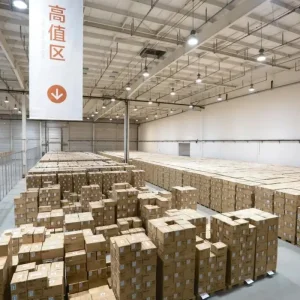
Wholesale Warehouse Storage Services Area Scope Service, Supplier
Inquire Rates & CapacityDirect tier-one carrier access, contracted sea shipping schedules, and managed fulfillment configurations engineered for global distribution networks.
Wholesale Warehouse Storage Services Area Scope Service, Supplier
Inquire Rates & Capacity
Wholesale Less Than Container Load From China To Amazon FBA Shipping Agent, Exporter
Inquire Rates & Capacity
China Shipping from China to Amazon FBA in Canada Agent, Exporter
Inquire Rates & Capacity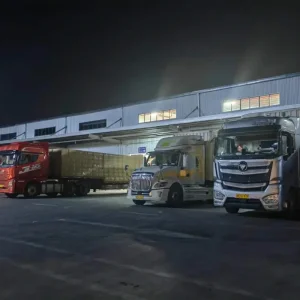
China Land Freight From China Service, Agent
Inquire Rates & Capacity
Wholesale DDU Delivered Duty Unpaid Shipping Service, Exporters
Inquire Rates & Capacity
Wholesale DDP shipping From China to Middle East Agent, Exporters
Inquire Rates & Capacity
China Shipping from China to Amazon FBA in USA Service, Agent
Inquire Rates & Capacity
Wholesale DDP shipping From China To EU Agent, Exporter
Inquire Rates & CapacityUnderstanding ocean freight volatility requires an analytical approach to contract frameworks, surcharges, and land-sea multimodal nodes.
Wholesale sea shipping rates are founded upon base ocean freight (BAS) negotiated via Service Contracts between Tier-1 forwarders and carrier alliances (2M, Ocean Alliance, THE Alliance). General Rate Increases (GRIs) and Peak Season Surcharges (PSS) are dynamically evaluated by our pricing desk to insulate shippers against immediate market shocks.
Fluctuating maritime fuel indices—including Low Sulfur Fuel Oil (VLSFO) compliance mandates under IMO 2020 and emerging EU ETS carbon taxation—directly impact twenty-foot (TEU) and forty-foot (FEU) allocations. We monitor marine gasoil benchmarks across Shanghai, Singapore, and Rotterdam to hedge fuel index additions for bulk exporters.
Landed shipping economics depend heavily on terminal-level execution: Origin Terminal Handling Charges (OTHC), Destination DTHC, documentation filing (AMS, ENS, ISF 10+2), chassis split charges, and pier pass fees. Transparent wholesale rate transparency segregates standard ocean transit from terminal operational surcharges to eliminate hidden landed markups.
How Shanghai Meishe bridges the gap between manufacturing facilities across China's primary industrial zones and international deep-sea terminals.
We deploy dedicated pickup fleets spanning the Yangtze River Delta (Zhejiang, Jiangsu, Shanghai), Pearl River Delta (Shenzhen, Guangzhou, Dongguan), and Northern industrial corridors (Shandong, Hebei). Our consolidated drayage networks streamline raw ex-factory runs directly into bonded storage zones.
Procuring from multiple Chinese producers requires precision assembly. Operating owned consolidation platforms in Yiwu, Shenzhen, and Shanghai, we verify purchase order integrity, execute carton level relabeling, palletize to destination specifications, and consolidate disparate LCL orders into unified FCL boxes, cutting freight tariffs by up to 34%.
Direct EDI connections with port authorities in Ningbo-Zhoushan, Shanghai Port, Shenzhen (Yantian/Shekou), and Qingdao guarantee prompt container gate-in, space protection during seasonal blank sailings, and rapid issuance of Sea Waybills or Original Bills of Lading (OBL).
Mitigating cross-border regulatory exposure through precision customs brokerage, DDP fiscal clearance, and specialized cargo handling.
Precise Harmonized System classification mitigates Section 301 punitive tariffs, anti-dumping duties, and import holds. Pre-departure document audits ensure total compliance across US CBP, EU TARIC, and CBSA entry regimes.
Our true Delivered Duty Paid (DDP) infrastructure handles entry declarations, Value Added Tax (VAT) settlement via postponed accounting mechanisms in Europe, and single-entry/continuous customs bond coverage in North America.
Certified handling for UN3480/UN3481 lithium-ion power assemblies, built-in battery configurations, and magnetic merchandise. Complete MSDS review, UN-spec packaging, and maritime dangerous goods declaration (IMO DG filing).
Comprehensive Marine Cargo Insurance under Institute Cargo Clauses (A). Complete protection against physical loss, general average, rough weather, and port handling damage, eliminating balance sheet liability.
Comprehensive performance parameters for wholesale sea freight operations originating from major Chinese deep-water container berths.
| Trade Corridor | Service Modality | Port-to-Port (Days) | Door-to-Door DDP (Days) | Terminal Discharge Node | Target Commodity Alignment |
|---|---|---|---|---|---|
| China → US West Coast | Fast Ocean / Matson / Mason CLX | 10 – 12 Days | 14 – 18 Days | Long Beach / Los Angeles | High-Velocity E-Commerce / Amazon Replenishment |
| China → US East Coast | Standard Ocean All-Water (Alliances) | 24 – 28 Days | 30 – 35 Days | New York / Savannah / Norfolk | Heavy Machinery, Industrial Hardware, Bulky Consumer Goods |
| China → EU Gateway | Direct Deep-Sea (Suez/Cape Route) | 28 – 35 Days | 35 – 42 Days | Rotterdam / Hamburg / Antwerp | Automotive Spares, Consumer Tech, Retail Stock |
| China → Mediterranean | Direct Liner Hub Call | 22 – 26 Days | 28 – 33 Days | Valencia / Piraeus / Genoa | Apparel, Construction Supplies, Electronics |
| China → Australia | Direct Short-Sea Express | 11 – 15 Days | 16 – 20 Days | Sydney / Melbourne / Brisbane | Home Goods, Industrial Modules, Renewable Tech |
| China → Middle East | Direct Liner Arabian Gulf | 14 – 18 Days | 20 – 25 Days | Jebel Ali / Dammam / Sohar | Building Materials, Smart Hardware, Consumer Goods |
Critical macro factors altering maritime wholesale pricing, operational routing, and procurement methodology.
Disruptions in primary maritime chokepoints—notably the Red Sea corridor and Panama Canal draft restrictions—have institutionalized route diversions via the Cape of Good Hope. Our pricing intelligence platforms anticipate extended transit adjustments and fuel surcharges, offering shippers dual-routing stability via multimodal Sea-Air and China-Europe Express Railway alternatives.
Global procurement teams have transitioned from monolithic inventory holding to regional micro-fulfillment distribution models. By splitting FCL consignments across regional fulfillment centers (e.g., separating West Coast and East Coast destinations at China origin), importers decrease last-mile domestic trucking expenses by up to 45% while expediting order delivery windows.
Enterprise procurement executives increasingly demand hybrid rate architecture: blending fixed-rate Service Contracts to guarantee minimum quantity commitments (MQC) with spot-market flexibility to capture tariff drops during carrier volume dips. Shanghai Meishe provides flexible contractual frameworks to match high-volume commercial targets.
How customized ocean freight solutions power operational success for distinct commercial profiles.
Tailored for high-turnover e-commerce brands on Amazon, Walmart, and Wayfair. Cargo arriving at US/EU ports moves immediately through bonded cross-docking facilities, where pallets are configured strictly under FBA specifications before drop-trailer delivery, eliminating storage penalties.
Supporting just-in-time manufacturing assembly lines across Europe and North America. Utilizing guaranteed-space FCL contracts with premium expedited vessel calls to protect critical production run rates against unexpected maritime transit delays.
Serving multinational retail distributors requiring simultaneous replenishment of brick-and-mortar storefronts and DTC fulfillment hubs. Multi-box de-consolidation and regional linehaul deliver predictable landed margin performance.
Authoritative guidance on wholesale maritime procurement, Incoterms liability, customs protocols, and operations management.
Full multimodal routing, risk consultancy, and regional direct distribution lines available through our global network.
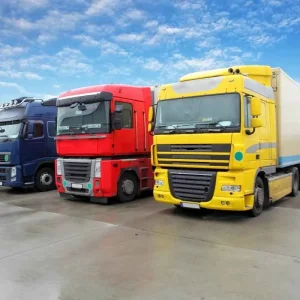
China DDP shipping From China to Southeast Asia Service, Exporter
Inquire Rates & Capacity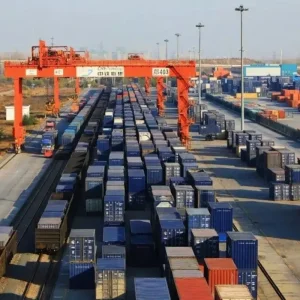
China DDP Shipping From China (RAILWAY To EU) Agent, Suppliers
Inquire Rates & Capacity
China INSURANCE BROKERAGE CONSULTANCY Service, Exporters
Inquire Rates & Capacity
China Supply Chain Solutions From China Supplier, Suppliers
Inquire Rates & Capacity
Wholesale Shipping from China to AU with DDP Supplier, Suppliers
Inquire Rates & Capacity
China FCL Shipment To All Over the World Supplier, Suppliers
Inquire Rates & Capacity
China China To UK/USA/Europe Air Freight Service, Exporter
Inquire Rates & Capacity
Wholesale DDP shipping From China to Mexico Agent, Exporter
Inquire Rates & Capacity