Immediate capacity deployments connecting premier industrial hubs across Shanghai, Shenzhen, Ningbo, and Yiwu to target receiving points across North America, Europe, and the Asia-Pacific region.





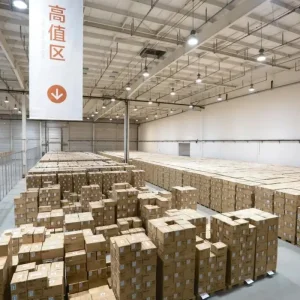

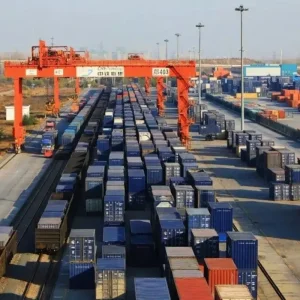
Modern international trade requires migrating from fragile legacy warehousing concepts toward agile, decentralized distribution models capable of buffering geopolitical frictions and shipping rate volatilities.
Historical single-stream supply networks focused strictly on minimal safety stocks have proved structurally brittle under maritime chokepoints and canal restrictions. Contemporary wholesale procurement mandates resilient safety buffers placed strategically at origin consolidation facilities. By aggregating stock closer to the manufacturing point, global distributors insulate against domestic warehouse inflation while maintaining rapid forward-dispatch capability.
Excessive destination drayage, per diem chassis fees, and maritime carrier demurrage charges represent severe balance-sheet liabilities. Professional wholesale warehousing suppliers provide bonded and non-bonded cross-docking environments upstream, holding cargo within Chinese logistics clusters until exact ocean schedule windows and import clearance pathways are verified, preventing costly container accumulation at destination seaports.
Modern wholesale enterprises cannot afford siloed product allocations. Leading wholesale warehouse suppliers operate central consolidation engines that ingest factory runs and hold them under neutral staging. Goods can be instantaneously relabeled, kitted, or split into specific FCL/LCL ocean consignments, rapid air freight drops, or direct cross-border e-commerce parcels based on real-time inventory drawdowns.
True supply chain resilience is rooted in data fidelity. Origin-based wholesale warehousing transforms traditional opaque freight handling into a transparent, audit-ready operational workflow. High-resolution carton-level scanning, digital photographic verification, and integrated EDI customs filings eliminate clearance holdups before vessels even depart Chinese territorial waters.
Analyzing why China-based warehouse consolidation centers offer unparalleled volumetric utilization, labor productivity, and customs execution speeds compared to Western-side 3PL hubs.
Direct proximity to major manufacturing hubs across Guangdong, Zhejiang, and Jiangsu enables short-haul drayage directly from factory floors to our central CFS terminals within 4 to 12 hours. This eliminates inter-provincial delays, optimizes SKU batching, and slashes domestic handling costs prior to export filing.
Freight forwarders operating origin facilities leverage automated 3D dimensional laser scanning and custom pallet rebuild systems. By restacking, banding, and shrink-wrapping loose cartons, container volumetric fill rates regularly exceed 94% to 96% on standard 40HQ ocean containers, substantially cutting per-unit freight overhead.
Detecting manufacturing defects, structural carton crushing, or labeling discrepancies after goods arrive in North America or Europe leads to severe financial waste. Origin warehouse staging provides non-destructive sampling, drop testing, barcoding compliance audits, and instant remediation before commercial release.
Handling UN38.3 lithium battery shipments, magnetic products, and liquid consignments demands rigorous technical certification. Dedicated consolidation facilities in China systematically verify MSDS dossiers, UN-rated outer packaging, and dangerous goods declarations to ensure uninterrupted maritime and air clearances.
| Operational Vector | Traditional Ex-Works / FOB Direct Shipping | Integrated Origin Wholesale Warehousing | Enterprise Business Impact |
|---|---|---|---|
| Inventory Visibility | Opaque until port discharge; zero SKU tracking at origin. | Real-time Cloud WMS scanning upon factory unloading dock. | Eliminates blind inventory gaps across 18–35 day ocean transits. |
| Carton & Pallet Integrity | Factory-direct handling often lacks international export durability. | Automated corner-boarding, reinforced banding, and stretch-wrapping. | Reduces cargo damage claims from ~3.8% down to less than 0.15%. |
| Fulfillment Routing Flexibility | Fixed manifest locked at booking; impossible to divert mid-transit. | Dynamic origin splitting into FBA, regional 3PL, and B2B wholesale. | Prevents out-of-stock spikes across high-velocity sales channels. |
| Customs & Tariffs Exposure | Individual small LCL entries incur disproportionate broker fees. | Consolidated commercial invoicing and unified HTS code auditing. | Saves 14% to 22% in destination broker disbursements and duty overhead. |
How origin warehouse consolidation seamlessly bridges localized regulatory architectures, tax regimes, and final-mile distribution networks worldwide.
Streamlining Amazon FBA replenishment via West Coast (LA/Long Beach) and East Coast gateways. Origin CFS facilities stage shipments to balance delivery across regional fulfillment centers (e.g., ONT8, SMF3, TEB9), handling pallet prep according to Amazon's stringent receiving standards to bypass costly floor-load deconsolidation charges.
Integrating ocean freight into Rotterdam, Hamburg, and Felixstowe with DDP customs brokerage. Origin facilities facilitate Article 23 Dutch VAT deferral mechanisms, generate compliant dual-declarations for post-Brexit UK/EU inventory staging, and balance multimodal rail transit options via the China-Europe Railway Express.
Executing rigorous biosecurity packaging for Australia (DAFF compliance, timber ISPM-15 certification) and managing structured DDP entries into Mexico (handling NOM import approvals, Padron de Importadores clearance). Our origin hubs guarantee every wooden crate and carton complies fully before sailing.
How algorithmically managed warehousing hubs reduce inventory dwell times, automate cargo classification, and safeguard multinational gross margins.
High-throughput sorting facilities utilize automated volumetric computing systems that cross-reference incoming carton dimensions with international ocean container schematics. By modeling center-of-gravity distribution and load pressure points, our automated packing algorithms prevent product crushing while squeezing maximum physical cubic meters out of every chartered 40HQ container.
Modern wholesale warehousing engines aggregate real-time maritime congestion data, canal transit wait times, and terminal dwell trends. Predictive models forecast container availability windows days in advance, dynamically triggering factory dispatch orders precisely when export vessel berths open to bypass unnecessary origin holding surcharges.
Misclassified tariff codes represent the primary driver of international customs audits and severe penalty fees. State-of-the-art warehouse management software integrates AI-assisted HTS engine lookups, verifying commercial invoice descriptions, material compositions, and declared values against actual cargo scans before generating binding export manifests.
Critical operational criteria international procurement heads must evaluate when selecting a primary Chinese wholesale warehousing and export consolidation partner.
Confirm whether the supplier operates Comprehensive Bonded Zone (CBZ) facilities. Bonded storage allows untaxed goods transfer, deferred value-added tax payments, and flexible export tax rebate settlements before cargo physically exits China.
Ensure direct integration capability with internal ERP systems (SAP, NetSuite) or ecommerce management channels (Shopify, Amazon Seller Central) via automated webhooks for real-time inventory reconciliation.
Verify that your forwarder maintains direct Service Contracts (BCO level) with premier ocean alliances (2M, Ocean Alliance, THE Alliance) to secure fixed space commitments and bypass peak-season rollings.
Verify dedicated marine cargo insurance policies covering all-risk Institute Cargo Clauses (A), including maritime salvage, general average declarations, and transit water damage scenarios.
Exhaustive answers to the most complex inquiries regarding international freight consolidation, customs handling, and origin warehousing management.
Bonded warehouses operate under strict customs supervision inside Comprehensive Bonded Zones. Goods stored inside bonded areas are treated as being legally outside domestic customs territory, meaning import customs duties and VAT are deferred until goods leave the facility, and domestic suppliers can claim VAT export rebates upon delivery to the warehouse. Non-bonded warehouses operate without direct customs control, making them cheaper and better suited for standard carton labeling, short-term buffering, and simple multi-vendor consolidation prior to standard export filing.
Air cargo charges are calculated based on whichever is greater: actual gross weight or volumetric dimensional weight (calculated using standard IATA formulas, typically length x width x height in centimeters divided by 6000 or 5000). Factories frequently pack goods inside standard oversized cartons containing empty air gaps. In our consolidation hubs, technicians open and repack, vacuum-seal soft goods, remove excess outer air, or rebuild master cartons to align exactly with structural volume, routinely cutting chargeable air freight weights by 18% to 35%.
Under true Delivered Duty Paid (DDP) trade agreements, the forwarder or their authorized local partner customs broker typically handles destination customs clearance and settles all import duty and tax obligations directly with local authorities. The buyer receives goods free and clear of customs intervention at their dock. Depending on local laws in jurisdictions such as the United States or the European Union, foreign importers may also obtain their own Foreign Importer of Record status or leverage a local nominal broker bond provided through our enterprise compliance network.
Yes. Buyer's Consolidation (Buyer's Consol) is a primary operational strength of origin warehousing. Multiple separate factory orders arrive at our CFS facility under individual domestic waybills. We inspect, sort, and stuff these combined orders into a single 20GP, 40GP, or 40HQ container. We then generate one consolidated Ocean Master Bill of Lading and unified export customs filings, eliminating duplicate destination terminal handling fees, single-entry broker charges, and separate delivery drayage costs.
Sensitive items require specialized regulatory protocols before entering air or maritime channels. In our consolidation facilities, shipments containing lithium-ion or lithium-metal cells (UN3480/UN3481) undergo battery test report reviews (UN38.3 certification, 1.2m drop test documentation, and verified MSDS). Outer cartons receive official UN hazard labeling, and magnetic goods undergo gauss-meter testing to ensure magnetic flux measurements meet strict airline shielding specifications.
Ocean transit exposes cargo to rough wave action and significant temperature swings, which can cause container condensation, commonly known as container rain. Our origin warehouse teams install heavy-duty container moisture desiccants, strap and brace cargo using industrial pneumatic dunnage air bags, apply rigid plastic corner protectors, and use high-gauge stretch film wrapping on all palletized goods to ensure structural stability throughout maritime voyages.
Specialized routing options engineered for high-volume cross-border sellers, industrial equipment distributors, and direct-to-warehouse importers.
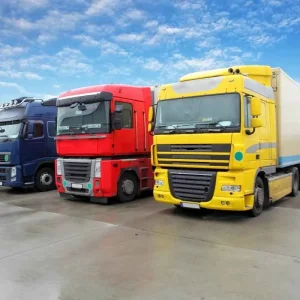


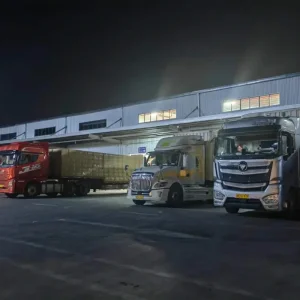




Shifting from disjointed single-factory orders to a unified, origin-managed logistics strategy provides measurable commercial benefits.
Direct wholesale consolidation eliminates scattered small-parcel LCL surcharges, reduces destination documentation fees, and optimizes container fill rates. Merging multiple factory outputs into standard 40HQ loads lowers your net landed cost per unit by 15% to 28%.
Centralized origin hubs in Shanghai, Shenzhen, and Ningbo stage and audit ready-to-ship inventory ahead of sales spikes. Automated WMS integrations trigger dispatch bookings immediately upon demand, cutting weeks off the typical procurement cycle.
Pre-shipment carton audits, verified HTS tariff matching, and complete DDP brokerage management safeguard your cross-border shipments against customs holds, surprise tariff adjustments, and unexpected destination penalties.
