
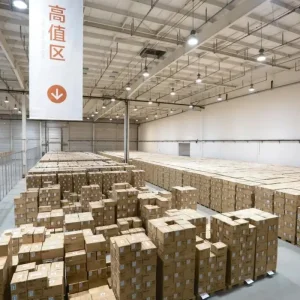
Russia Market Consolidation Warehouse & Hub Storage
Comprehensive staging, pallet sorting, and protective packaging across Shanghai, Shenzhen, and Yiwu designed specifically for Russian long-haul freight endurance.
View Warehouse Specs →High-performance consolidation nodes connecting coastal Chinese manufacturing centers to land-bridge railway terminals and customs checkpoints across the Russian Federation.
Comprehensive staging, pallet sorting, and protective packaging across Shanghai, Shenzhen, and Yiwu designed specifically for Russian long-haul freight endurance.
View Warehouse Specs →
Optimized for licensed Russian enterprise importers managing internal customs protocols. Factory pickup, container loading, and multimodal handover to Russian border posts.
Examine DDU Procedures →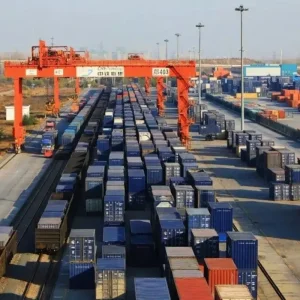
Intermodal block trains operating via Manzhouli, Zabaikalsk, and Erenhot directly into Moscow Freight Hubs (Vorsino, Bely Rast) with full customs integration.
Explore Railway Corridors →
All-risk coverage shielding high-value capital assets, industrial components, and consumer inventory against rail shunting, climatic shifts, and multimodal transfer risks.
Review Underwriting Terms →An architectural assessment of structural supply chain reconfiguration, the "Pivot to the East" (Поворот на Восток), and the surging demand for Class-A logistics nodes.
Following unprecedented global geopolitical realignment, the logistics architecture of the Russian Federation has undergone its most decisive pivot in modern history. Previously reliant on Western European maritime gateways such as Rotterdam, Hamburg, and the Baltic ports of St. Petersburg, Russian commercial procurement has fundamentally redirected toward eastern trade lanes. Chinese manufacturing ecosystems now represent the primary source of supply for automotive spare parts, consumer electronics, industrial manufacturing equipment, building materials, and fast-moving retail commodities.
This macroeconomic shift has placed intense pressure on traditional domestic warehousing assets. In Moscow Oblast, which historically accounts for more than 55% of all Class-A modern warehouse real estate in Russia, vacancy rates fell below historic lows of 0.8% to 1.2% in recent years. Demand driven by domestic e-commerce giants—principally Wildberries, Ozon, and Yandex Market—alongside large-scale wholesale importers, has necessitated the forward-positioning of warehouse storage outside Russian borders, specifically inside Chinese export hubs.
Modern Russian wholesale distribution relies on tightly coupled multi-tier gateway corridors connecting Chinese staging facilities directly to primary consumption centers:
Flawless warehouse management for the Russian trade sector requires strict engineering-level adherence to origin serialization, labeling standards, and customs validation.
Russia's national track-and-trace system mandates cryptographic 2D DataMatrix codes across an expanding matrix of product categories (apparel, footwear, tires, electronics, perfumes, industrial fluids).
Applying these serialization codes after customs entry in Russia introduces enormous labor overhead and terminal fines. Our origin warehouses in China integrate digital barcode aggregation at the item, carton, and pallet level prior to container sealing.
Goods circulating within the Eurasian Economic Union (EAEU: Russia, Belarus, Kazakhstan, Armenia, Kyrgyzstan) must bear the Eurasian Conformity (EAC) mark verified against technical regulations (TR CU).
Warehouse personnel verify documentation, print high-adhesion Russian-language compliant label marks, and certify that declarations match physical inventory precisely, preempting border rejections.
Discrepancies between Chinese export customs classifications and the Russian TN VED nomenclature can freeze shipments under the control of the Russian Federal Customs Service (FTS).
Our warehouse documentation team provides physical commodity inspection, weight-volume metric verifications, and exact tariff code alignment before filing export declarations, ensuring seamless clearance.
| Logistics Attribute | Traditional Port-to-Port Freight | Integrated Origin Warehouse Staging (Our Model) | Commercial Impact on Russian Importer |
|---|---|---|---|
| Chestny ZNAK Labeling | Handled manually at high-cost Russian customs terminals | Pre-printed, verified & aggregated digitally at Chinese factory/warehouse | Reduces clearance dwell time from 14 days to under 48 hours; cuts labor cost by 65% |
| Multi-Supplier Consolidation | Individual fragmented LCL shipments; high per-unit tariff fees | Consolidated into dense FCL or full railway container sets (40HQ) | Saves 25–40% in total landed freight costs per cubic meter |
| Climatic Packaging Standards | Standard domestic packaging; prone to sub-zero transit degradation | Reinforced desiccants, thermal shrink-wrap, and heavy-gauge edge protectors | Eliminates cargo damage from severe Siberian winter transits (-30°C to -45°C) |
| Inventory Transparency | Blind transit until cargo arrives at destination terminal | Real-time WMS telemetry with SKU barcode scanning & photographic proof | Allows Russian e-commerce buyers to pre-sell stock while goods are still in transit |
How advanced robotics, intelligent WMS platforms, and dynamic factory-to-warehouse logistics create an unassailable efficiency engine for high-volume Russian procurement.
Our flagship consolidation facilities in Shanghai, Ningbo, and Shenzhen leverage Automated Guided Vehicles (AGVs) and optical volumetric scanners to process inward freight within minutes of unloading.
By standardizing pallet architecture to fit Russian railway dimensions (optimizing 1200×800mm Euro-pallets and 1200×1000mm standard industrial racks), our systems maximize high-cube container utilization up to 98.4% volumetric efficiency.
The competitive advantage of Chinese supply chains extends far beyond raw production costs. The integration of China's Industry 4.0 infrastructure allows direct communication between industrial factory outputs and cross-border consolidation facilities. When Russian distributors order complex machinery, spare parts, or consumer goods across multiple manufacturing clusters (e.g., hardware from Zhejiang, electronics from Guangdong, industrial valves from Jiangsu), the coordination challenge is massive.
Our specialized warehouse storage services bridge this gap through dynamic consolidation. Instead of shipping disparate LCL consignments with high administrative customs costs, goods are buffered in our central bonded and domestic facilities. Here, shipments undergo systematic quality audits, packaging upgrades to withstand Eurasian railway shunting stresses, and batch-by-batch synchronization.
This operational architecture reduces working capital cycles for Russian buyers by up to 35%. Rather than maintaining expensive capital assets idle in high-cost domestic Russian logistics parks, enterprises utilize our flexible square-meterage on demand, ordering shipments only as consumption dictates.
Tailored engineering protocols resolving sector-specific bottlenecks across critical industrial and consumer supply streams.
Challenge: Fragmented components (bearings, brake rotors, hydraulic pumps) sourced across 12 distinct tier-2 suppliers requiring anti-rust preservation and strict Russian labeling.
Solution: Origin warehouse staging with VCI (Vapor Corrosion Inhibitor) packaging, automated barcoding, and heavy-gauge wooden palletization dispatched via direct railway block train to Chelyabinsk and Nizhny Novgorod.
Challenge: Lithium-battery safety regulations, ESD protection, and strict Russian consumer protection labeling under Federal Law No. 2300-1.
Solution: Climate-controlled warehouse storage in Shenzhen with specialized hazardous goods (UN3481/UN3480) compliance documentation, batch testing, and rapid air/rail express delivery directly into Moscow logistics hubs.
Challenge: High-mix, low-volume SKUs requiring item-by-item Chestny ZNAK DataMatrix tag application and individual poly-bagging before marketplace intake.
Solution: High-throughput fulfillment staging in Yiwu. Real-time scanning, printing, and laser application of cryptographic QR codes, reducing marketplace receiving rejection to zero.
Challenge: Heavy, high-density bulk cargo vulnerable to moisture during trans-Siberian maritime and rail interchanges.
Solution: Heavy-duty plastic thermal hood wrapping, silica desiccant saturation calculation, and specialized intermodal container lining executed at Ningbo port consolidation yards before sea transit to Vladivostok.
Key compliance, financial, and operational considerations answered by our senior cross-border supply chain directors.
Seamlessly scaling from localized China warehouse storage to multi-continent distribution corridors, air charters, and full container shipping.

Integrated supplier audits, manufacturing staging, quality control checkpoints, and lean inventory orchestration across major industrial zones.
Explore Solutions →
Guaranteed 20GP, 40GP, and 40HQ container allocations directly with major maritime alliances and national railway operators serving Eurasian ports.
View FCL Rates →
Over 50,000 m² of secure warehousing in Shanghai, Yiwu, Ningbo, and Shenzhen with barcoded racking, 24/7 CCTV, and temperature control.
Explore Warehouses →
Express air connections for time-sensitive electronics, medical commodities, and critical industrial replacements connecting major hubs globally.
Book Air Cargo →
Full customs clearance, tariff pre-payment, and inland drayage across North American manufacturing hubs with verified customs compliance.
Examine Lane Specs →
Comprehensive VAT and customs management across EU member states, providing seamless deliveries from Chinese origin consolidation to destination.
View EU Corridors →
SABER conformity verification, bonded warehousing, and swift port handling through Jebel Ali, Dammam, and Riyadh logistics complexes.
Review GCC Lanes →
Specialized prep services, FNSKU labeling, palletization compliance, and priority appointment booking for premier retail fulfillment centers.
Fulfillment Details →